When deciding to install a home elevator, many people often focus on the cabin, design, or brand, forgetting one crucial element: elevator shaft dimensions.
In fact, this is the fundamental technical basis that determines the feasibility of installation, investment costs, and operational safety. If calculations are wrong from the outset, homeowners may have to adjust the building structure, incurring additional costs and affecting the completion schedule of the house.
Therefore, it is important to find out about it beforehand. Standard elevator shaft dimensions for a home This will help you be more proactive in the design, construction, and selection of the right elevator model to suit your actual space.
1. What is an elevator shaft?
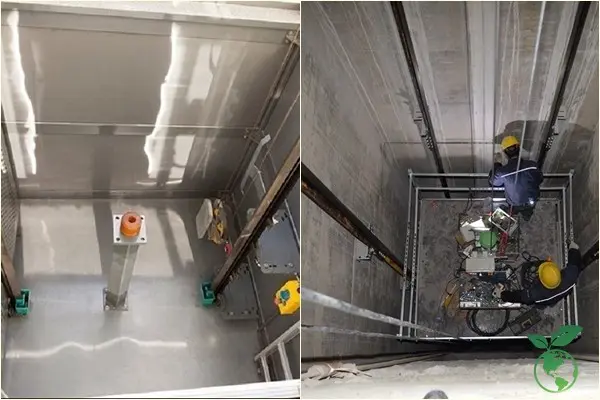
The elevator shaft is a vertical space running through the floors of a building, constructed to house the entire elevator system. This is where the cabin, guide rails, counterweight, landing doors, and related technical components are located.
Simply put, if the elevator cabin is the part that users directly use every day, then the elevator shaft is the foundational structure that ensures the entire system operates stably, accurately, and safely.
Proper elevator shaft design not only facilitates installation but also optimizes space, extends equipment lifespan, and minimizes technical risks during long-term use.
2. Important technical specifications to know
To accurately calculate the dimensions of a home elevator shaft, you need to know the following four basic parameters:
2.1. Elevator shaft dimensions
This is the overall size of the elevator shaft, usually calculated as width x depth. This parameter directly affects the available space in the house and the ability to select a suitable load capacity.
2.2. Cabin dimensions
Cabin size refers to the actual usable space inside the elevator. The larger the cabin, the more comfortable the user experience, but it will require a larger elevator shaft.
2.3. Pit
The elevator pit is the recessed area below the floor level of the lowest floor. This area is used to install shock absorbers and create a safe space for the elevator cabin during operation. The pit depth depends on the type of elevator and the construction conditions of the building.
2.4. Height of OH
OH is the space above the highest stopping point of the cabin. This is a necessary safety clearance for equipment placement and to ensure stable operation when the cabin reaches the top floor.
These four parameters are always closely related. When one parameter is changed, the remaining factors must also be calculated simultaneously to ensure technical compatibility.

3. Home Elevator Shaft Dimensions by Floors and Load Capacity
Choosing the right elevator shaft size for a home elevator, considering the number of floors and load capacity, not only ensures safety but also optimizes space and installation costs. Below is a table summarizing standard elevator shaft sizes for homes, clearly categorized by load capacity and number of floors commonly used today.
3.1. Elevator Shaft Dimensions by Load Capacity
| Load capacity | Cabin (RxS mm) | Ladder (RxS mm) | PIT | Overhead Height | Suitable for |
|---|---|---|---|---|---|
| 250kg | 800 x 800 | 1300 x 1300 | 500 - 600 | 2600 - 2800 | 2 floors |
| 300kg | 900 x 900 | 1400 x 1400 | 600 - 700 | 2700 - 2900 | 2 - 3 floors |
| 350kg | 1000 x 1000 | 1500 x 1500 | 700 - 800 | 2800 - 3200 | 3 floors |
| 450kg | 1100 x 1200 | 1600 x 1600 | 800 - 1000 | 3000 - 3500 | 4 floors |
| 630kg | 1100 x 1400 | 1800 x 1800 | 1000 - 1400 | 3200 - 3800 | 5 floors |
Note: The above specifications are for reference only and may vary depending on the elevator manufacturer and the specific requirements of the building.
3.2. Elevator Shaft Dimensions by Number of Floors
| Floors | Overhead Height | Depth of PIT | Product Proposal |
|---|---|---|---|
| 2 | 2600 - 2800 mm | 500 - 700 mm | Machine roomless elevator, lightweight hydraulic |
| 3 | 2800 - 3200 mm | 600 - 800 mm | Machine roomless screw elevator |
| 4 | 3000 - 3500 mm | 800 - 1000 mm | Elevators with or without machine rooms |
| 5 | 3200 - 3800 mm | 1000 - 1400 mm | Cable-driven elevators require higher technical expertise. |
Note: Specifications can be adjusted depending on the load capacity, construction area, and the type of elevator used.
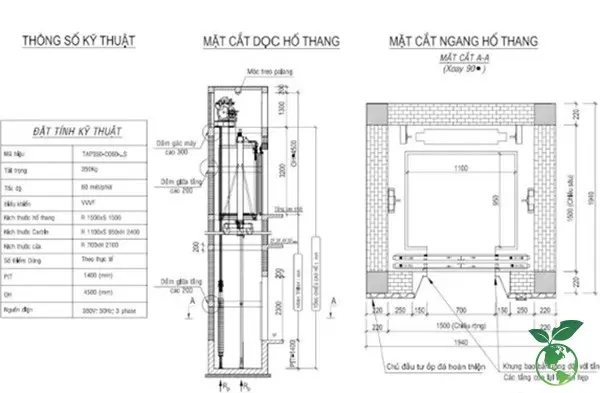
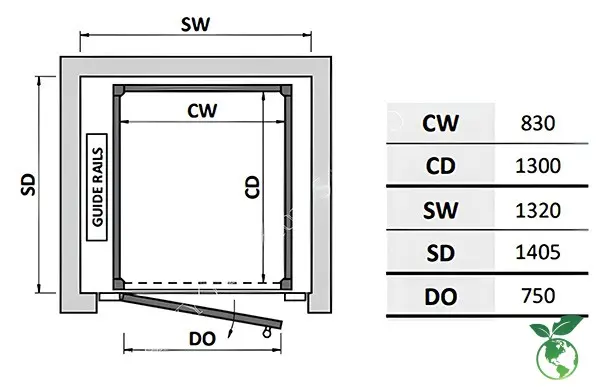
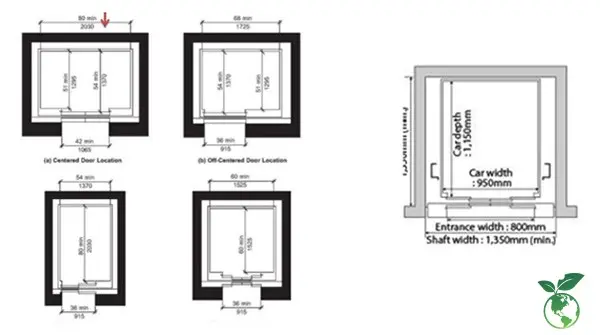
4. Home Elevator Shaft Technical Drawings
Technical drawings are crucial documents that fully illustrate the dimensions of the elevator shaft, floor door locations, pit depth, overhead height (OH), and related components. They form the basis for architects, construction engineers, and elevator suppliers to coordinate and implement the project accurately from the outset.
A typical technical drawing of a home elevator shaft usually includes:
- Overall shaft dimensions
- Cabin dimensions
- Door opening position and floor door width
- PIT depth
- Overhead height (OH)
- Location of guide rails, counterweights, and technical equipment.
Having detailed technical drawings will help minimize errors during construction, avoiding the need for structural modifications after the rough construction is completed.
5. Important Considerations When Designing a Home Elevator Shaft
To ensure that the elevator is installed correctly and operates stably over the long term, homeowners should pay attention to the following points:
- Work with an elevator provider from the early design stage to finalize standard specifications
- Avoid estimating shaft dimensions based on assumptions
- Ensure proper coordination between shaft size, cabin, door opening, PIT, and overhead (OH)
- Prioritize solutions that match actual usage needs instead of choosing excessive load capacity
- For renovation projects, conduct a thorough site survey before selecting an elevator solution
In many cases, even a small deviation in shaft dimensions can affect the entire installation plan. Therefore, accuracy from the beginning is crucial.
6. Solutions for small or difficult-to-renovate homes
Not all buildings have ample space to accommodate a standard-sized elevator shaft. For townhouses, renovated homes, or buildings with limited floor space, several suitable solutions can still be applied, such as:
7.1. Low PIT elevator
This solution is suitable for houses where deep foundation excavation is not feasible. Low-pitched elevators reduce the need for underground construction while still ensuring safe operation.
7.2. Machine-roomless elevators
This is the optimal choice for buildings with height restrictions. This type of staircase reduces overhead requirements and increases design flexibility.
7.3. Compact glass elevators
Besides saving space, glass elevators also create a more open feel for interior spaces, making them particularly suitable for modern homes.
7.4. Elevator placement within the stairwell.
This is a solution chosen by many families in Vietnam to utilize the space between staircases, saving space while ensuring functionality.
8. Conclusion
Dimensions of a home elevator shaft This is a fundamental factor that directly affects the design, construction, and long-term efficiency of the entire elevator system. Accurate calculations from the outset will help homeowners optimize space, control costs, and minimize unexpected issues during installation.
If you are in the design or preparation phase of building a house, consulting the specifications of the elevator shaft, pit, overhead space, and technical drawings beforehand is a crucial step in choosing the most suitable solution for your project.
Choosing the right solution from the start not only ensures safe and durable elevator operation but also enhances the usability and aesthetics of the entire living space.