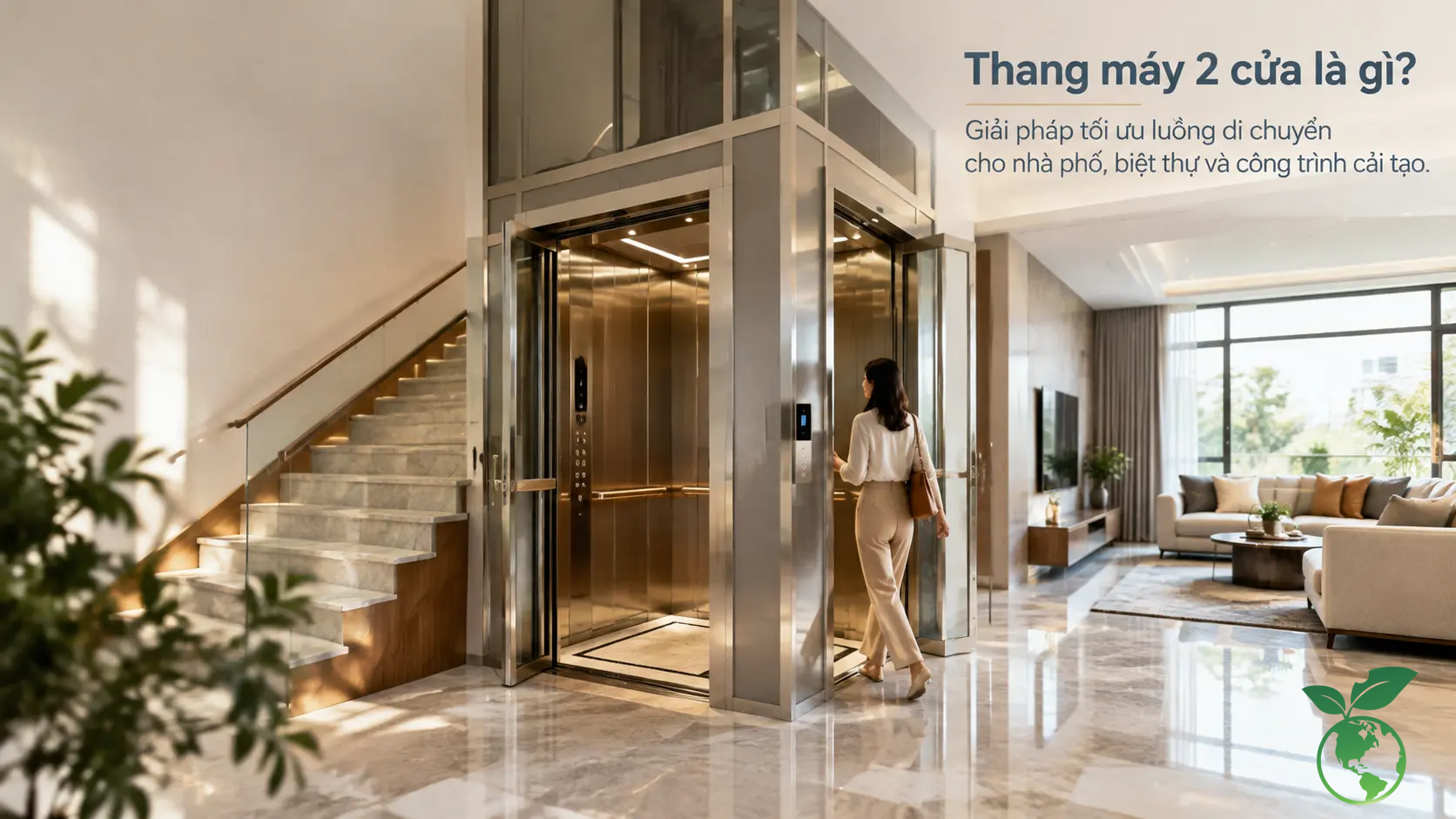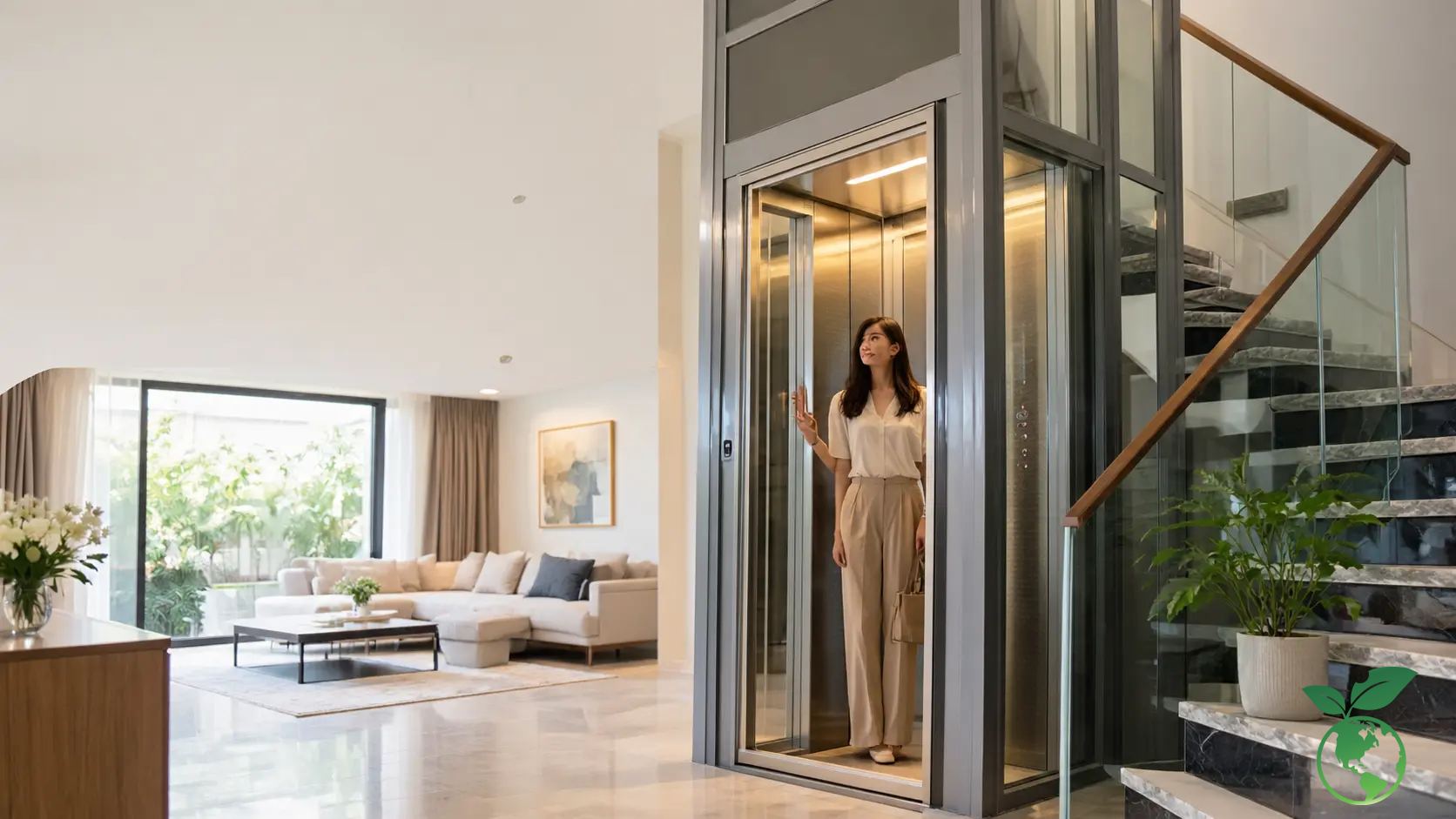
Joint venture home elevator is usually decided when the shaft is finalized but the configuration remains vague. The housing market in Vietnam is recovering segment by segment, while primary housing prices in Hanoi increased strongly in 2026. This article helps investors read the correct Mitsubishi configuration, price, construction risks, and ownership costs.
The point to clarify is that “Mitsubishi joint venture” does not mean a complete product from Japan. This is usually a combination of imported components and domestically assembled cabin, mechanical parts, or assembly. Quality depends on the origin documentation, shaft design, installation capacity, and maintenance regime.
When should you choose a joint venture home elevator instead of an imported one?
A joint venture home elevator is suitable when the homeowner needs to balance the budget, cabin flexibility, and completion progress. However, low price is only meaningful when the safety configuration is maintained. Investors must distinguish which parts are imported, which are processed domestically, and who is responsible for system integration.

| Criteria | Joint venture | Fully imported | Decisive meaning |
|---|---|---|---|
| Cabin | High customization | By brand catalog | Fits interior |
| Supply time | More flexible | Dependent on imports | Control progress |
| Spare parts | Must specify source | More synchronous | Reduced replacement risk |
| Initial cost | Usually easier to optimize | Usually higher | Life cycle comparison |
- Determine the number of simultaneous users during the family's peak hours.
- Check the number of stops, travel height, and the location of the electrical cabinet.
- Evaluate the ability to dig a pit before finalizing the drive type.
- Compare the needs for wheelchairs, the elderly, or light goods.
- Request a configuration table that clearly states the brand of each main component.
- Compare the total cost of ownership instead of just looking at the initial purchase price.
Evaluate actual usage needs according to the number of floors, number of people, and operating frequency
Houses with four to five floors, three-generation families, and a frequency of about 40 to 70 trips per day should usually start from a load capacity of 350kg or 450kg. A 300kg capacity is suitable for houses with fewer people, but actual cabin dimensions need to be checked. Do not choose capacity based on intuition or just because the shaft is narrow.
Cases where joint venture elevators help optimize costs while still meeting safety standards
Joint venture elevators are worth considering when the shaft has stable dimensions, the project needs a cabin with a unique style, and the homeowner accepts checking the configuration carefully. EN 81-20:2026 specifies safety requirements for design and installation, while EN 81-50:2026 focuses on design, calculation, and component testing.
Cases where you should not choose a joint venture home elevator to avoid future issues
Should not choose when the house has high traffic, requires continuous operation, extreme shaft space, or component documentation is not transparent. Boutique hotels, rental houses, and villas with service staff should prioritize synchronous configurations, spare parts with stock commitments, and clear incident handling times.
Why do many homeowners misunderstand the quality of Mitsubishi joint venture elevators?
Nhiều người đánh đồng nhãn Mitsubishi trên một linh kiện với xuất xứ của toàn bộ thang máy. Cách hiểu đúng là kiểm tra từng cụm: máy kéo, tủ điều khiển, cửa tầng, rail, cáp tải, bộ khống chế vượt tốc và bộ cứu hộ tự động. Thang Máy Việt Ý khuyến nghị chỉ ký hợp đồng khi bảng cấu hình có mã hàng, nguồn gốc xuất xứ và điều kiện thay thế.
Practical situation: A townhouse in Hanoi with five floors uses a shaft of 1,450 x 1,450mm. The homeowner chooses a load of 350kg, four stops, and a striped stainless steel cabin. The joint venture plan retains the usable area but must change the cabin door to a center-opening type to avoid hitting the corridor.
Practical situation: A villa in Thao Dien needs a load of 450kg for six people. The investor abandons the cheaper plan because they cannot prove the origin of the traction machine. The final configuration uses a VVVF inverter, automatic doors, and a rescue device, helping to control the operating experience well.
Conclusion: a joint venture home elevator is suitable when the homeowner can control the configuration, shaft, and warranty responsibility; it is not suitable when buying only based on the brand or low price.
What items should be checked before quoting a Mitsubishi joint venture home elevator?
A good quote is not the shortest price list. It must clearly show the scope of supply, technical configuration, construction conditions, and excluded works. A non-detailed quote may be cheap at signing but becomes a source of extra costs during installation or maintenance.
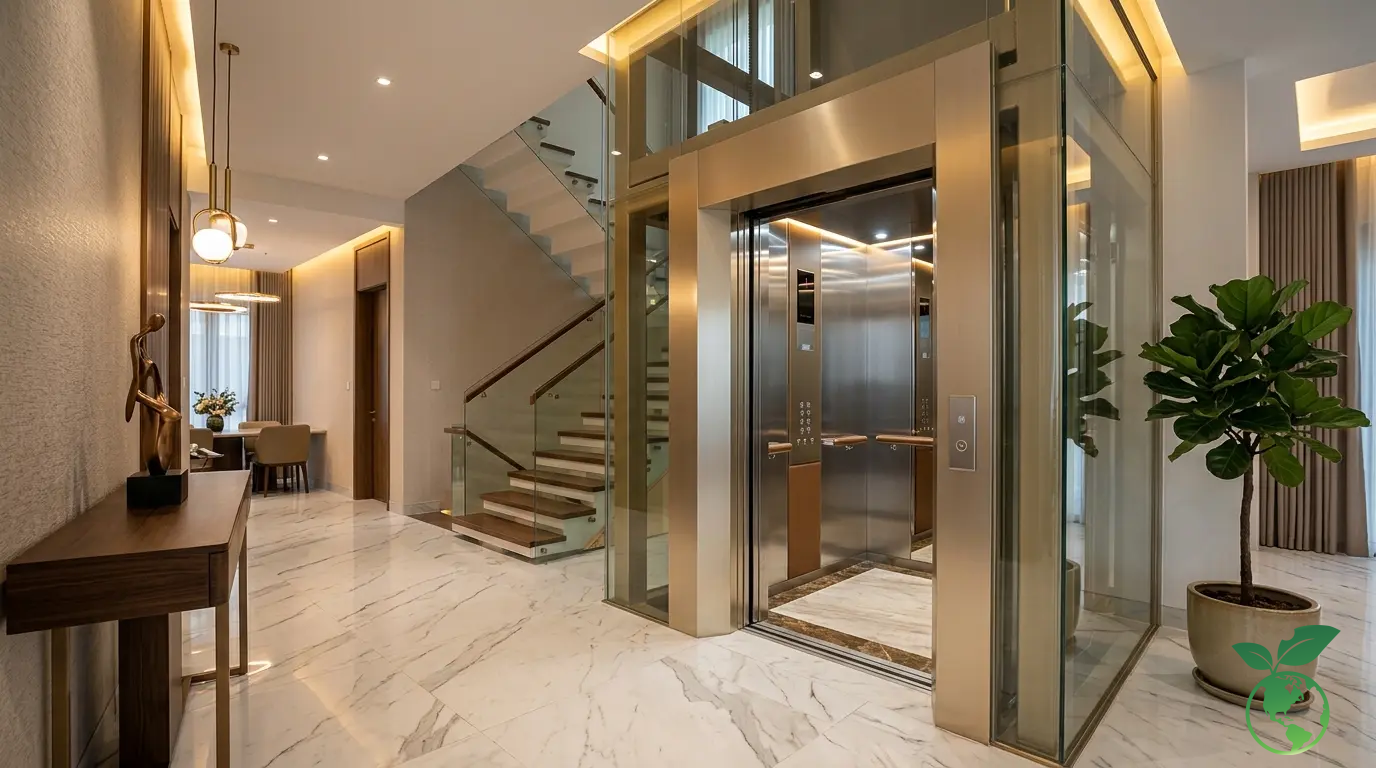
| Item | Need to check | Risks if missing | Evidence to request |
|---|---|---|---|
| Traction machine | Code, origin | Hard to replace | CO, CQ |
| Electrical cabinet | Inverter, rescue | Stop elevator during power outage | Principle diagram |
| Rail and cable | Specification, standard | Smoothness reduction | Ex-factory slip |
| Floor door | Door type, dimensions | Obstacles to completion | Door drawing |
| Cabin | Materials, accessories | Interior cost overrun | Approved sample |
- Request to clearly state the brand and code of the traction machine.
- Check if the electrical cabinet has an automatic rescue device during power outages.
- Compare power capacity with the actual power source of the building.
- Check the guide rail specifications and hoisting cables in the configuration table.
- Finalize cabin wall materials, ceiling, floor, and handrails before production.
- Request listing of transportation, installation, inspection, and VAT.
Check the origin of main components before finalizing the elevator configuration
Ask to separate safety components and aesthetic components. Traction machine, control cabinet, overspeed governor, mechanical brake, and floor door directly affect operation. Stainless steel cabins, floor stones, and decorative lights strongly affect aesthetics, but cannot replace safety requirements.
Compare engine, electrical cabinet, rail, hoisting cable, and safety equipment in the quote
The engine here should be understood as the traction machine. The quote needs to show the geared or gearless type, power, speed, load, and automatic rescue device. Guide rails, hoisting cables, and overspeed governors should not be recorded generically as “according to standards”, because these details determine the ability to control when the elevator operates abnormally.
Check cabin materials, floor doors, and interior according to housing conditions
Glass cabins fit houses with airy shafts, but require control of fingerprints and lighting. Striped stainless steel cabins fit townhouses with high frequency. For coastal houses in Da Nang, consider anti-corrosion materials and stricter cleaning schedules. The phrase “home elevator cabin design” should be finalized by an approved sample, not just by reference photos.
Details easily missed in a joint venture elevator quote
Báo giá thang máy liên doanh thường thiếu phần hoàn thiện mặt ngoài cửa tầng, chống thấm hố pít, điện ba pha, vận chuyển khó, tháo dỡ vật cản, kiểm định lần đầu và chi phí bảo trì sau bảo hành. Dựa trên kinh nghiệm thi công của Thang Máy Việt Ý, mọi khoản loại trừ phải được ghi thành dòng riêng để tránh tranh cãi.
Practical situation: Renovated house in District 3, HCMC uses a shaft right next to the stairs. The initial quote lacked the cost of steel frame reinforcement and hoist transportation. When surveying again, the homeowner switched to a 300kg cabin to keep the walkway width.
Practical situation: A villa in Da Nang chooses a glass cabin for the shaft in the middle of the house. After checking the light, the design team added sunshades for the glass roof and door sensors. Costs increased slightly, but glare at noon was significantly reduced.
Conclusion: only compare quotes when every technical item, construction part, and exclusion condition are placed on the same level.
What factors does the price of a joint venture home elevator depend on?
The price of a joint venture home elevator does not have a fixed level for every house. Load, number of floors, travel, traction machine type, floor door, cabin material, and transportation conditions all affect the total cost. Published prices should only be used for preliminary budgeting, not replacing an actual survey.
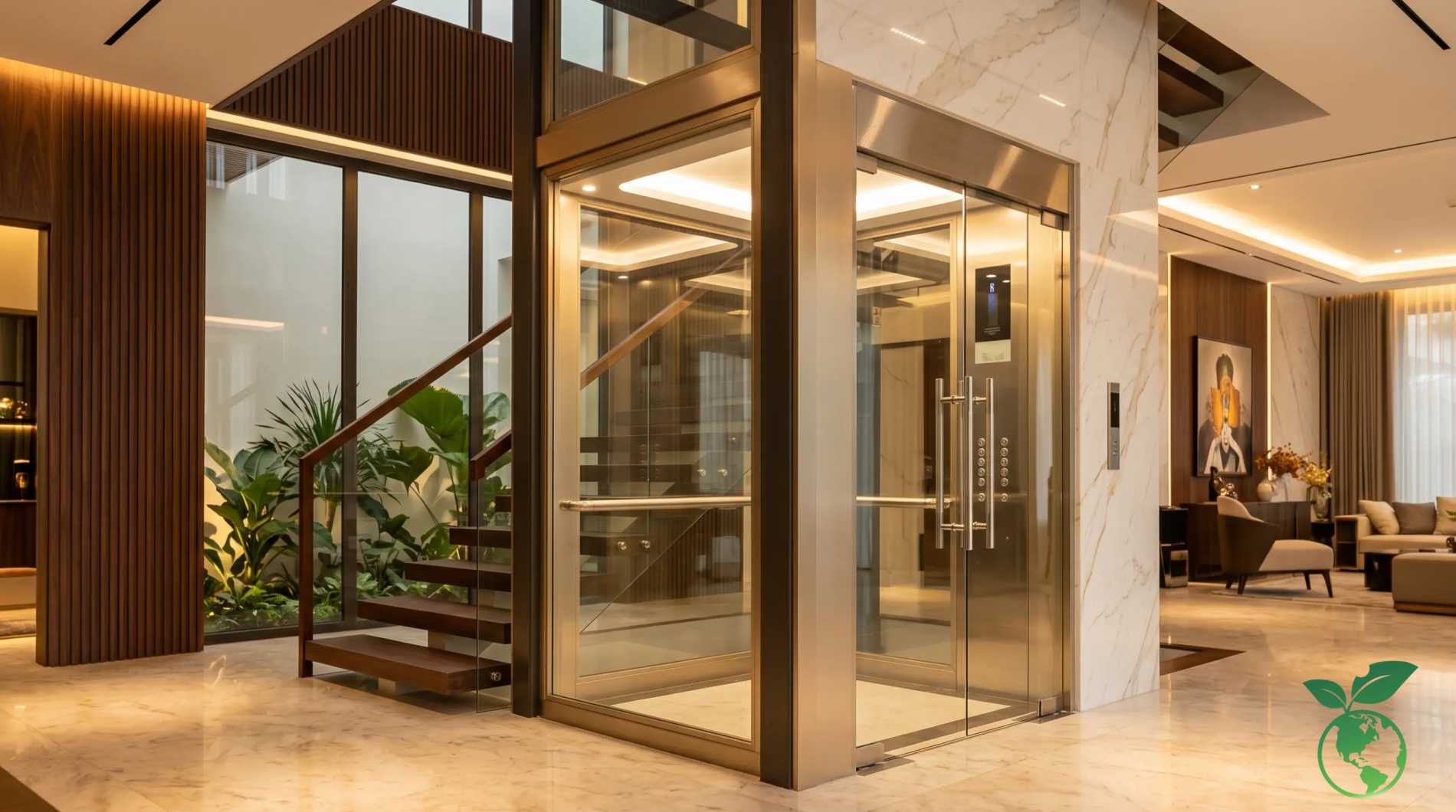
| Load capacity | Suitable for | Cabin suggestion | Points to note |
|---|---|---|---|
| 300kg | 2–3 people | Compact | Limited wheelchair |
| 350kg | Small family | More comfortable | Popular for townhouses |
| 450kg | 3 generations | Wider | Suitable for villas |
| 630kg | Small hotel | Light cargo | Need large shaft |
- Compare with same load, same number of stops, and same speed.
- Ask clearly if the price includes floor doors and door frames.
- Check the type of traction machine and the control cabinet placement plan.
- Distinguish between equipment costs and shaft construction costs.
- Prepare for pit treatment, waterproofing, and separate power supply.
- Request a quote with validity period and payment terms.
How to read a joint venture home elevator quote according to load 300kg, 350kg, 450kg, and 630kg
Do not assume that larger load only increases equipment price. It can also increase cabin dimensions, shaft, counterweight, power, and structural requirements. 350kg load is usually a good balance for townhouses. 450kg load is suitable when transporting the elderly with wheelchairs or luggage.
Effect of number of stops, travel height, and shaft type on total cost
Each stop adds floor doors, sensors, and installation labor. Higher travel needs to check cables, rails, and power. Concrete shafts are usually stable, while steel frames and glass create architectural effects but generate requirements for vibration resistance, structural connection, and weather shielding.
Cost difference between elevators with machine rooms and without machine rooms
Elevators with machine rooms make it easier to access equipment, but need space on the roof. Elevators without machine rooms save space, but require precise equipment layout in the shaft. Do not choose just to reduce roof height; check the OH index and future maintenance conditions.
Commonly encountered extra costs when actual survey differs from initial drawing
Phát sinh phổ biến gồm hố pít thiếu sâu, dầm giữa cửa tầng, lệch tim giếng thang, không đủ chiều cao OH, đường vận chuyển hẹp và nguồn điện chưa hoàn thiện. Theo các chuyên gia tại Thang Máy Việt Ý, bản vẽ kiến trúc chỉ là điểm khởi đầu; kích thước xây thô thực tế mới là cơ sở chốt đơn hàng.
How to compare joint venture elevator quotes to avoid choosing the fake cheap plan
Create a comparison table with at least five columns: traction machine, electrical cabinet, floor door, safety equipment, and installation scope. The fake cheap plan often reduces prices by omitting components, using vague descriptions, or transferring costs to exclusions. Low price cannot compensate for the risk of elevator stoppage and lack of spare parts.
Practical situation: Sala townhouse, HCMC needs a 350kg elevator, five stops, and 17m travel. The machine room-less plan reduces roof area, but needs to increase OH. The investor adjusted the roof before pouring concrete, avoiding future demolition.
Practical situation: Boutique hotel in Da Lat needs a load of 630kg. The cheapest quote does not include fireproof floor doors and inspection. The investor chooses a higher plan, but the all-inclusive scope is clear and reduces the risk of late opening.
Conclusion: the correct price is the price of the equivalent configuration, including construction work, inspection, and maintenance capacity after handover.
What to prepare before installing a joint venture elevator for a house?
Preparing the shaft incorrectly can increase costs more than any cabin material choice. Homeowners should finalize elevator parameters before building, instead of finding equipment after building. Pit, OH, door beams, and power supply must be checked using approved technical drawings.
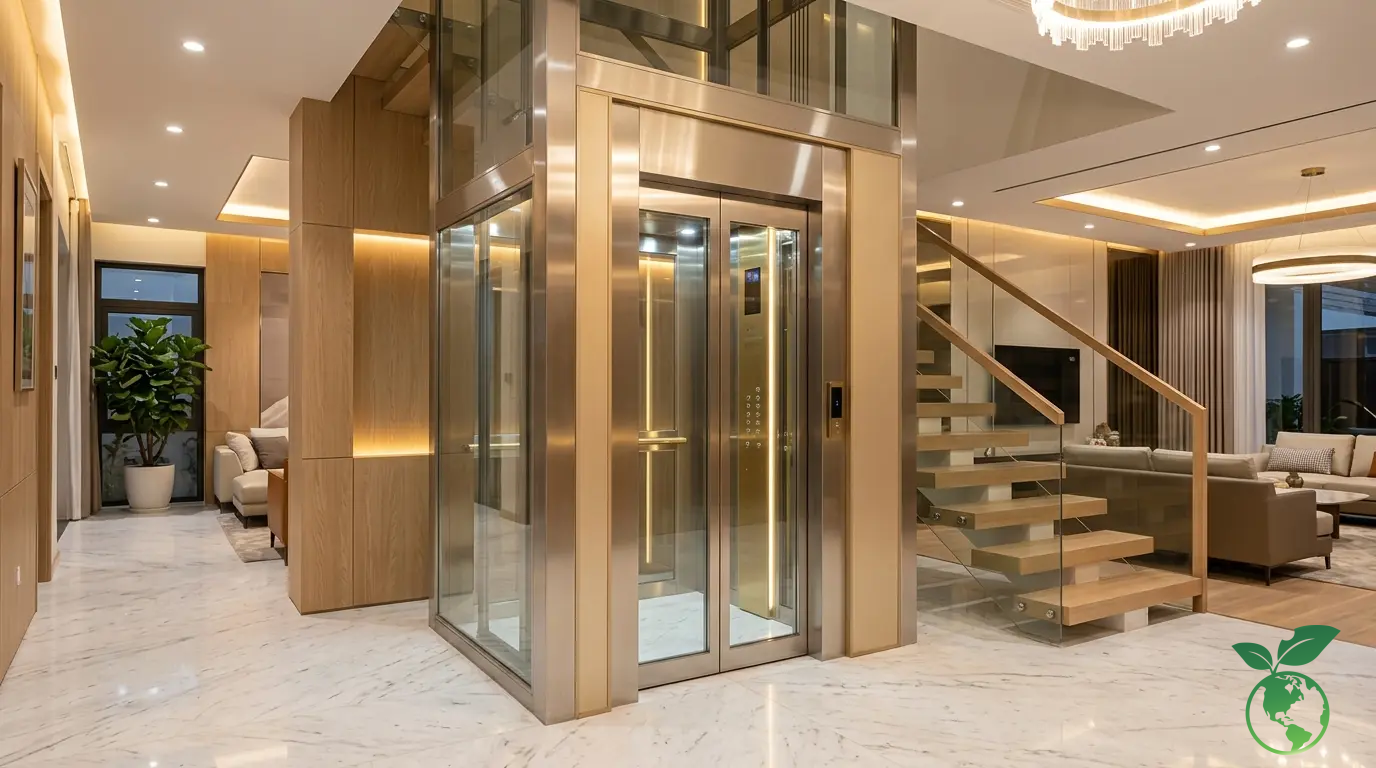
| Content | Timing | Confirmer | Risks if ignored |
|---|---|---|---|
| Shaft dimensions | Before building | Architect | Does not fit |
| Pit | Before pouring floor | Contractor | Must re-handle |
| OH | Before roofing | Elevator engineer | Lack of travel |
| Power supply | Before installation | Construction power | Slow test run |
| Waterproofing | Before finishing | Contractor | Pit flooded |
- Check clear shaft dimensions at every floor.
- Measure pit after waterproofing, not just by drawing.
- Check OH height from the finished floor of the top floor.
- Finalize floor door center to avoid misalignment with corridor or stairs.
- Prepare power source, grounding, and separate circuit breaker location for the elevator.
- Control rainwater, groundwater, and cleaning water that may enter the pit.
Checklist for checking architectural drawings before building the shaft
The drawing needs to show clear dimensions, beam positions, floors, floor doors, machine rooms if any, and equipment transport paths. The shaft is not just a void. It is a technical space that has requirements for verticality, rail connection surfaces, and maintenance accessibility.
Checklist for checking pit dimensions, OH, machine room, and floor doors before ordering
There is no one pit or OH size for every configuration. These parameters depend on load, speed, traction machine type, and safety design. Use the drawing of the finalized configuration, do not copy dimensions from another project or general advertising.
Shaft design errors cause joint venture home elevator installation costs to rise
Common errors are shafts narrowed by stone cladding, beams falling into the door area, pit not waterproofed, walls without enough positions for rail attachment, or wrong top floor height left. For renovated houses, the “pit-less elevator for renovation” solution needs to be carefully evaluated regarding technology and structure.
Points to unify with the construction contractor before the installation day
Construction, electrical/water, finishing, and elevator teams must unify responsibilities. Things to finalize include assembly ground, transport route, covering the shaft mouth, temporary power, floor door finishing schedule, and not putting materials into the shaft during the mechanical installation phase.
Practical situation: Old townhouse in Hanoi has a shaft of 1,200 x 1,200mm. The homeowner cannot dig a deep pit because of the old foundation. The plan was adjusted to a system that reduces deep digging requirements, combined with steel frame reinforcement at connection points.
Practical situation: Villa in Binh Duong has a concrete shaft in the middle of the house. The construction team left a horizontal beam at the second floor door. Discovering it before finishing helps change the beam elevation, avoiding having to cut and break cladding stone later.
Conclusion: finalize technical drawings of the exact configuration before pouring concrete, building walls, and finishing the shaft area.
How should the installation process of a Mitsubishi joint venture home elevator be controlled?
The installation process determines whether the elevator is smooth, safe, and easy to maintain. Even with good components, poor rail alignment, floor door installation, or incorrect wiring can create noise, vibration, and operating errors. Each milestone must have acceptance with a clear record.
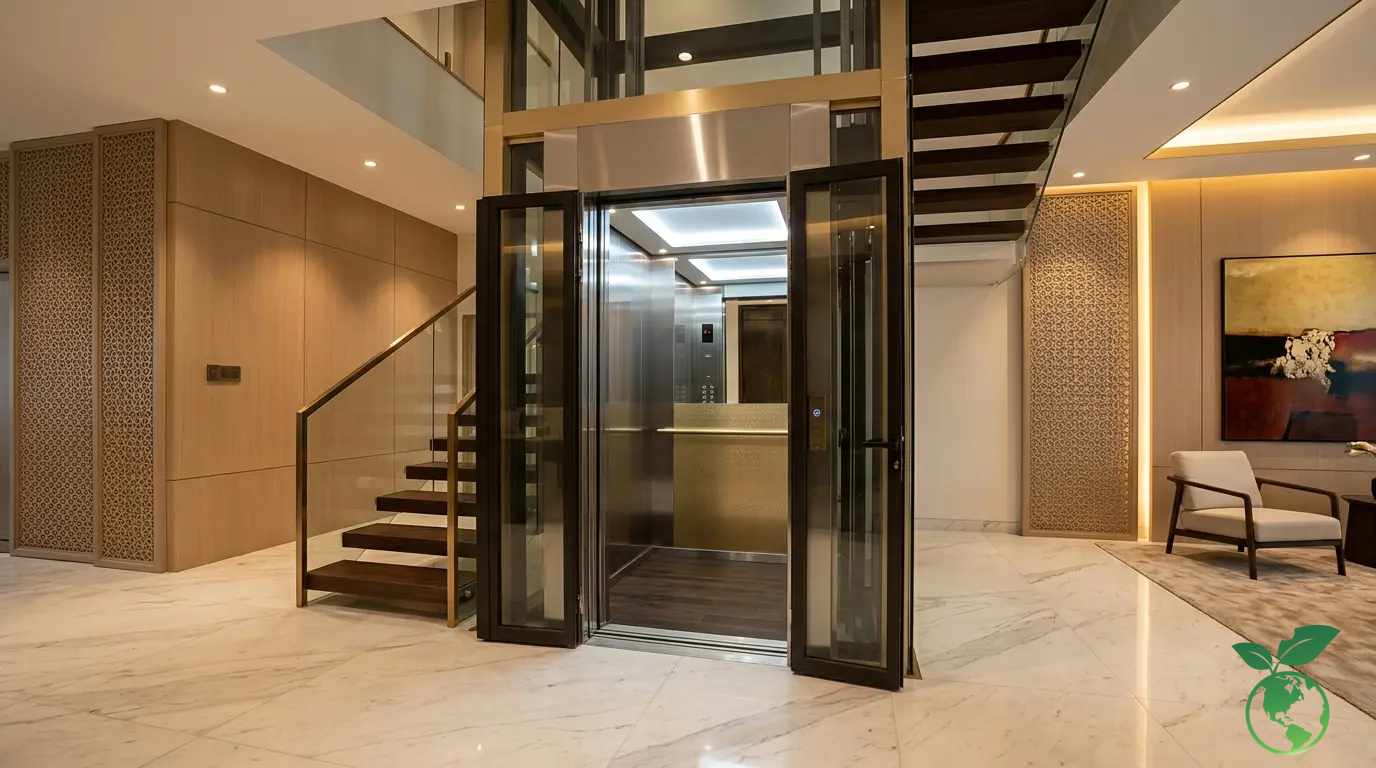
| Milestone | Control content | Documents needed | Desired results |
|---|---|---|---|
| Survey | Actual dimensions | Survey report | Finalize configuration |
| Production | Cabin, door, mechanical | Material approval sheet | Correct sample |
| Mechanical installation | Rail, frame, cabin | Internal report | Correct center |
| Test run | Electricity, door, rescue | Load test log | Stable Operation |
| Handover | Inspection, guide | Technical documents | Ready to use |
- Survey status and compare with approved drawings.
- Finalize configuration, cabin materials, and floor door drawings before production.
- Install guide rails, cabin frame, and traction machine according to technical sequence.
- Align floor doors, hoisting cables, and travel limit system.
- Connect electricity, set up control cabinet, and check automatic rescue device.
- Test run, inspect, and instruct operation before official handover.
Important acceptance milestones from survey, production to handover
The most important milestone is the final survey before production. Then comes shaft acceptance, rail installation, floor door completion, no-load test, load test, and handover. Each milestone needs photos, records, and a person in charge to avoid disputes when there are differences.
Errors easily arising during mechanical installation and equipment alignment
Crooked rails, uneven bracket distances, misaligned floor doors, rubbing cabins, and uneven tensioned hoisting cables are errors that must be handled early. These errors often create vibration, noise, or a feeling of an unstable cabin. Do not cover up with finishing before the technical team confirms.
Errors easily arising during electrical connection, test run, and inspection
Wrong phase connection, weak grounding, uncalibrated door settings, or non-functioning rescue device can stop the elevator. Elevators are equipment with strict safety requirements labor. The Law on Occupational Safety and Health is the legal foundation for safety control activities of equipment with strict requirements.
Technical documents need to be received fully before putting the elevator into use
Documents should include inspection certificate, as-built drawings, operating manual, maintenance schedule, component list, warranty conditions, and incident handling contact information. Homeowners should keep one paper copy at the electrical cabinet and one digitized copy. This is especially important when renovating or transferring the house.
Practical situation: Townhouse in Go Vap, HCMC installs a 350kg elevator in a concrete shaft. During the test run, the cabin vibrated slightly on the third floor. The technical team measured the rail again, adjusted the connection, and handled it before installing finishing cladding.
Practical situation: Resort villa in Da Nang uses a 450kg elevator, five stops. Voltage is unstable during test run. The investor added a separate power supply plan and grounding according to technical recommendations, helping the system operate more stably.
Conclusion: do not handover just based on the fact that the cabin runs; must check doors, rescue, load test, inspection, and technical documents.
After installation, how should the ownership cost of a joint venture elevator be managed?
Ownership costs include maintenance, inspection, electricity, cleaning, component replacement, and incident handling. Homeowners should consider this as infrastructure operating cost, not an extraordinary expense. Regular maintenance helps detect door, cable, and contact errors before they become major incidents.
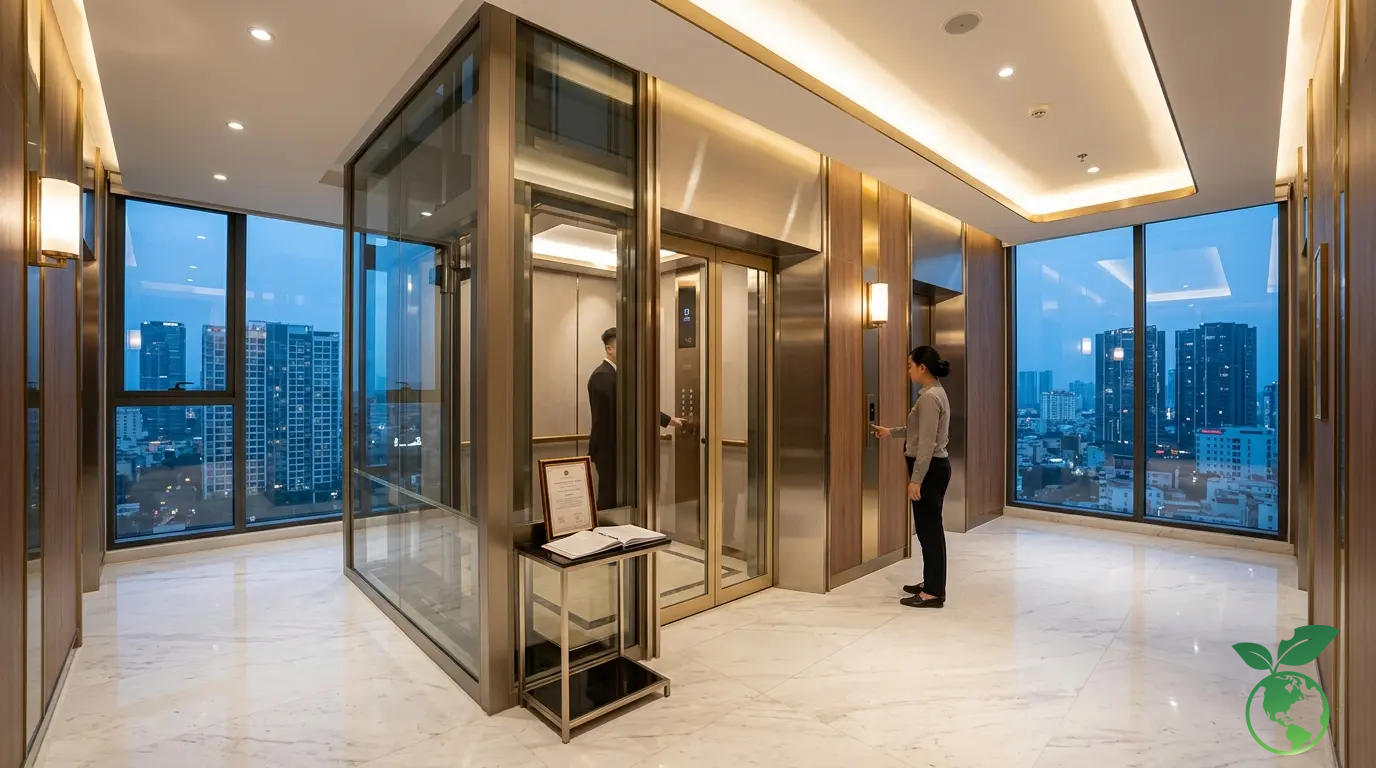
| Item | Reference frequency | Goal | Signs needing attention |
|---|---|---|---|
| Maintenance | Monthly or by contract | Check operation | Strange noise |
| Inspection | According to regulations and records | Confirm safety | Certificate expired |
| Clean pit | Periodically | Prevent water, trash | Damp or insects |
| Check door | Each maintenance | Stable opening/closing | Stuck, collision |
| Check rescue | Periodically | Ready for power outage | Doesn't return to floor |
- Plan maintenance budget according to contract and actual usage level.
- Check inspection schedule before the old certificate expires.
- Save control cabinet error codes and log of each handling time.
- Do not arbitrarily change technical settings without a technician.
- Keep the pit dry, clean, and not used as a material storage warehouse.
- Train people in the house how to use the alarm and rescue button.
Estimate budget for maintenance, component replacement, and periodic inspection after handover
Budget should be divided into three groups: periodic maintenance, inspection upon request, and wear-and-tear component replacement fund. Floor doors, door locks, wheels, contacts, and UPS may need handling earlier than large mechanical parts. The package “periodic home elevator maintenance” should clearly state the number of checks and response time.
Warranty terms need to be checked before signing an elevator contract
Check the warranty period for each group of components, exclusion conditions, response time when the elevator stops, responsibility for providing spare parts, and how to determine if the error is due to usage. A good contract does not promise “full warranty” generally. It states specifically which part is replaced, which part is only repaired.
Abnormal operating signs need early handling to avoid major damage
Need to call technicians when the cabin vibrates abnormally, doors open/close slowly, there is friction noise, elevator stops misaligned, floor call panels flicker, or there is a burning smell from the electrical cabinet. Do not continue operating to “monitor further”. Small incidents at doors or contacts can create annoying elevator stoppage situations for users.
How to store elevator records for convenience in maintenance and house transfer
Digitized records should include contract, survey record, as-built drawings, inspection certificate, maintenance slip, component codes, and repair history. When selling the house, this is evidence that the system is managed correctly. It also helps the new unit quickly evaluate the configuration before taking over maintenance.
Practical situation: A family in Phu My Hung, HCMC discovered the floor door closed slowly. Early inspection showed the door wheel was worn out. Replacing small components right during the maintenance period helps avoid stopping the elevator on the weekend.
Practical situation: Rental house in Hanoi stores all maintenance logs in digital records. When changing the management unit, the new technician can look up the control cabinet code and the battery replacement history, reducing initial inspection time.
Conclusion: good elevator management is data management, maintenance schedule, and abnormal signs, instead of waiting until the equipment stops to handle it.
FAQ about joint venture home elevators
The questions below focus on four points buyers care most about: durability, price, ability to install for renovations, and maintenance frequency. The correct answer always depends on the actual configuration, technical documents, and construction status.
| Question | Short answer | Decisive factor |
|---|---|---|
| Durability | Can be durable | Configuration, installation, maintenance |
| Price | Not fixed | Load, floor, material |
| Renovation | Can be installed | Pit, OH, structure |
| Maintenance | Need periodically | Frequency of use |
- Require direct survey instead of getting prices over the phone.
- Read the configuration table before evaluating the offering price.
- Prioritize transparent component records over brand names.
- Finalize warranty conditions and incident response time.
- Check pit, OH, and structure before choosing technology.
- Keep maintenance schedule as part of the home's asset records.
Are Mitsubishi joint venture home elevators durable?
Can be durable if the traction machine, electrical cabinet, safety equipment, and installation process meet the requirements. The Mitsubishi label does not automatically guarantee the entire system. Actual durability comes from synchronous configuration, good alignment, dry shaft environment, and on-schedule maintenance.
How much is the price of a joint venture home elevator currently?
The price of a joint venture home elevator should only be determined after a survey. 300kg, 350kg, 450kg, or 630kg loads have different cost levels. Number of stops, cabin materials, traction machine, floor doors, and construction conditions often make the total investment significantly different.
Can renovated houses install joint venture elevators?
Yes, if the survey confirms sufficient plans for the shaft, pit, OH, structure, and transport route. Some renovated houses use steel frames, glass shafts, or solutions to reduce deep digging requirements. However, do not decide before checking the foundation, beams, and existing loads.
How often does a joint venture home elevator need to be maintained?
Frequency should be according to the maintenance contract, usage level, and recommendations of the supplier. For family housing, periodic checks usually help detect door errors, contacts, and rescue systems early. Do not skip maintenance periods just because the elevator is still running normally.
A joint venture home elevator is a reasonable choice when the investor controls the configuration, shaft, and operating responsibility correctly. A good decision is not based on a quote number, but on the ability to operate safely for many years.
- Compare quotes on the same configuration and the same scope of work.
- Check the origin of each component affecting operational safety.
- Finalize pit, OH, and floor doors before construction.
- Do not use individual brands to evaluate overall quality.
- Budget for maintenance, inspection, and wear-and-tear components.
- Store full technical documents to manage long-term assets.
Thang Máy Việt Ý là đối tác cung cấp, lắp đặt và bảo trì thang máy cho biệt thự, nhà phố và khách sạn tại Việt Nam. Hãy dùng khảo sát thực tế để chốt cấu hình phù hợp, thay vì chọn phương án rẻ nhất trên bảng giá. Địa chỉ: 104/17 Đường 10, Phường Bình Tân, TP.HCM. Điện thoại: 0984.20.23.29. Email: info@thangmayitaly.com.