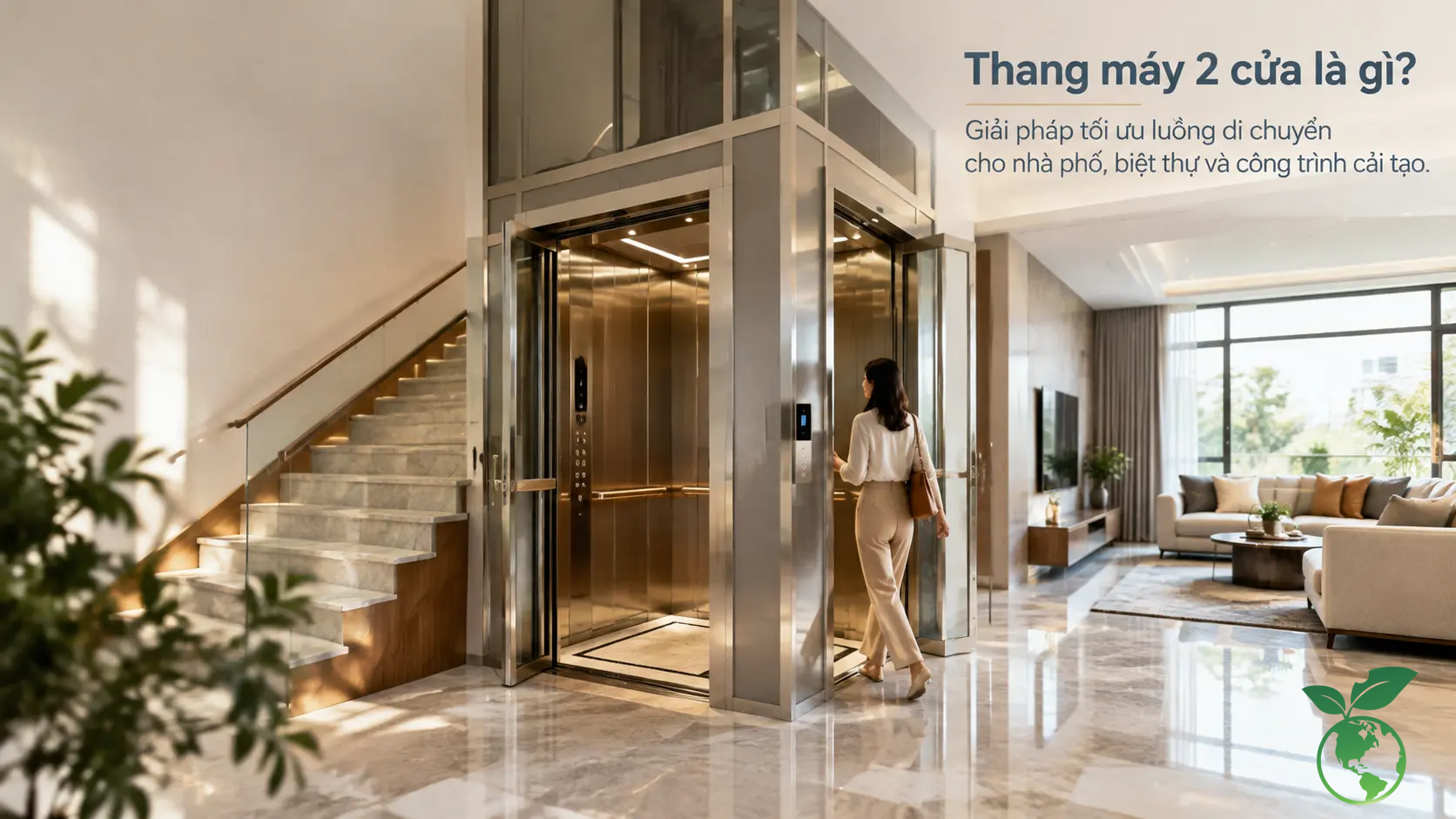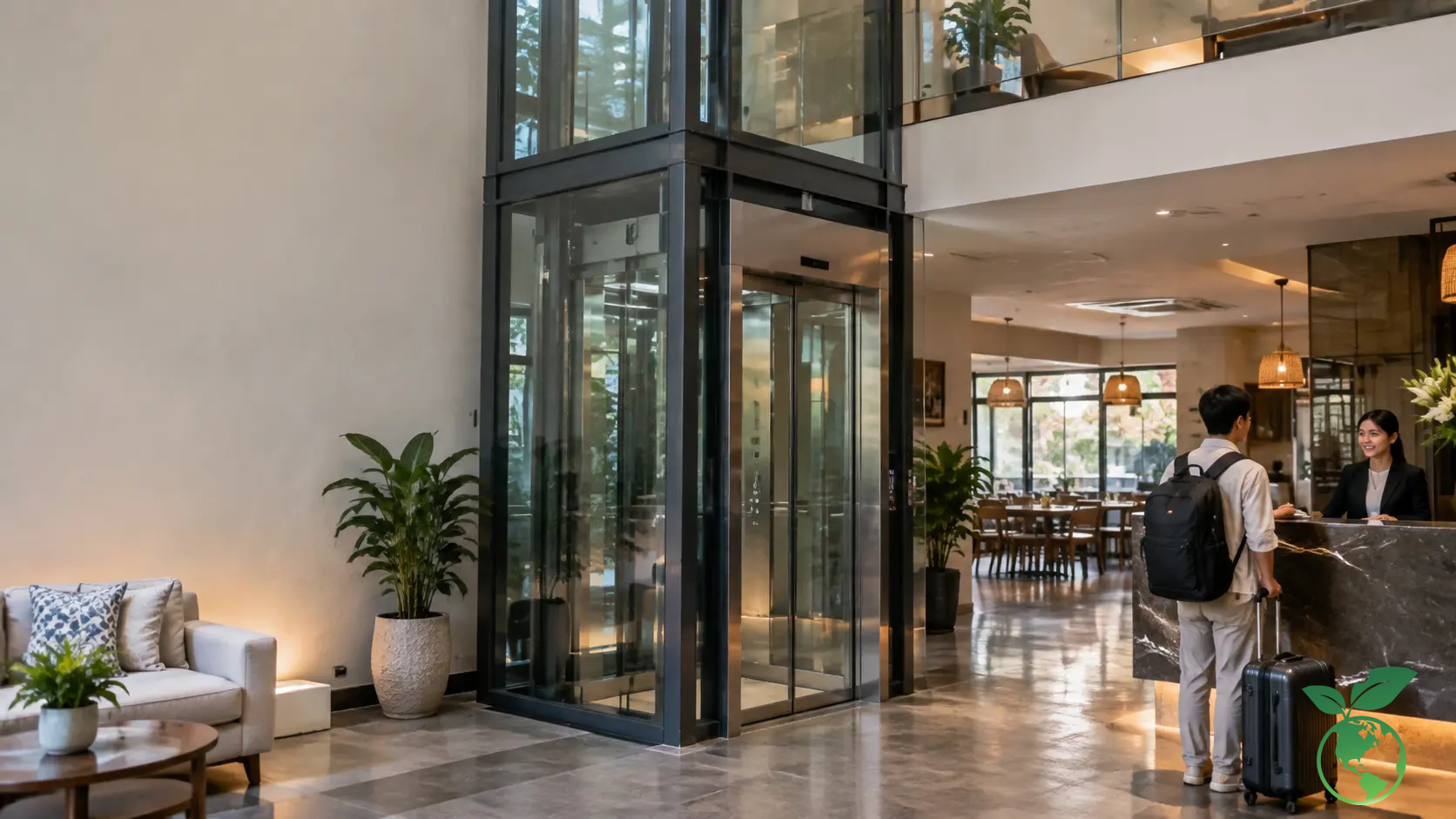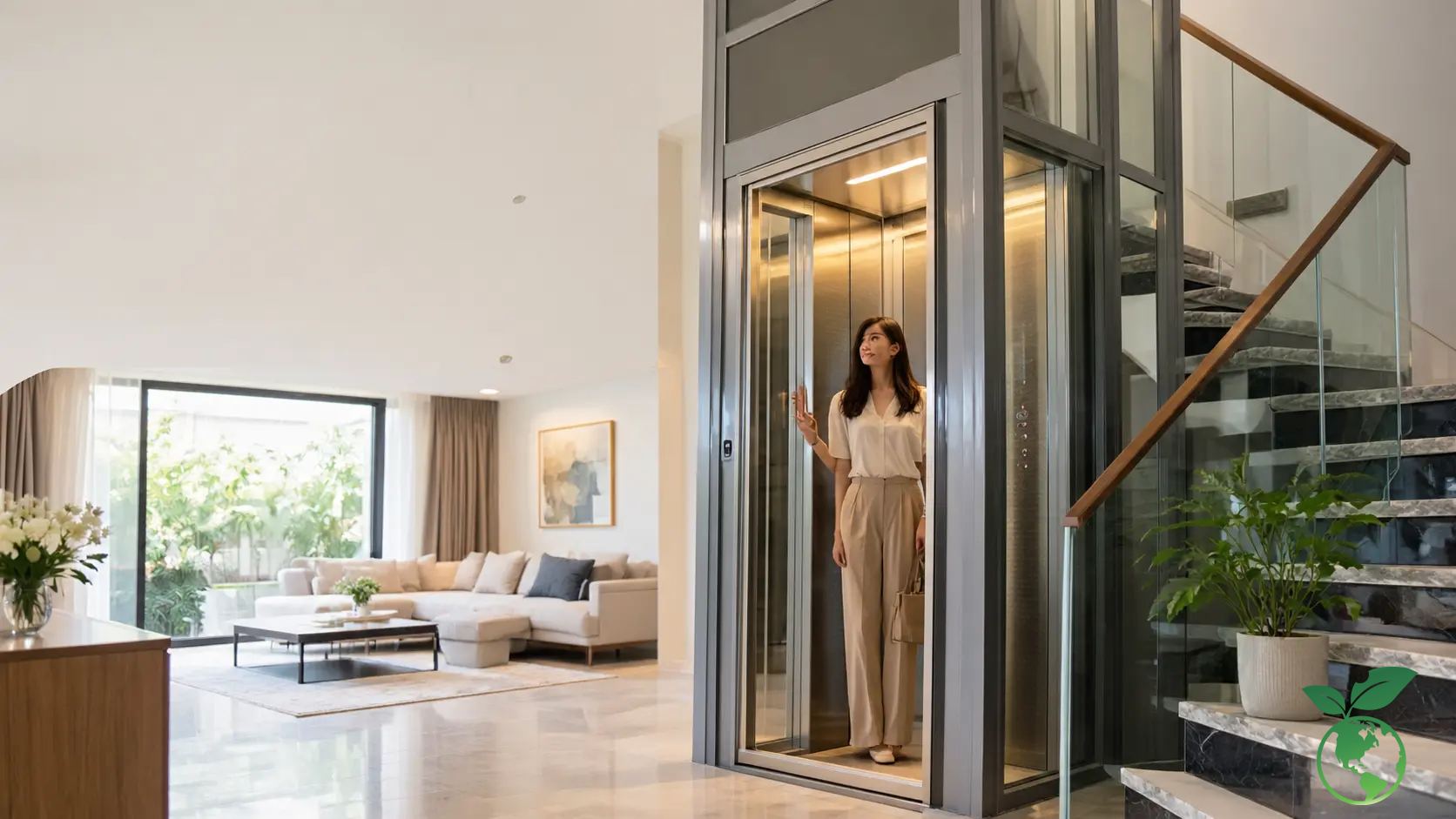
Home elevator pricing often becomes a bottleneck when the architecture has finalized the elevator shaft but has not locked in the load, pit, and overhead height. In 2026, Hanoi has over 30,000 new apartments on the market; primary prices increased by 36% and secondary prices by 26%, making the trend of upgrading living space quality much clearer. This article helps homeowners break down prices, select configurations, and avoid cost overruns before signing a contract.
Price list for 350kg and 450kg home elevators (all-inclusive) by common configuration
There is no fixed home elevator price for every project. A quote is only reliable when it shares the same load capacity, number of stops, shaft dimensions, cabin materials, and scope of construction. The levels below are a reference budget framework for individual homes and do not replace a technical survey.
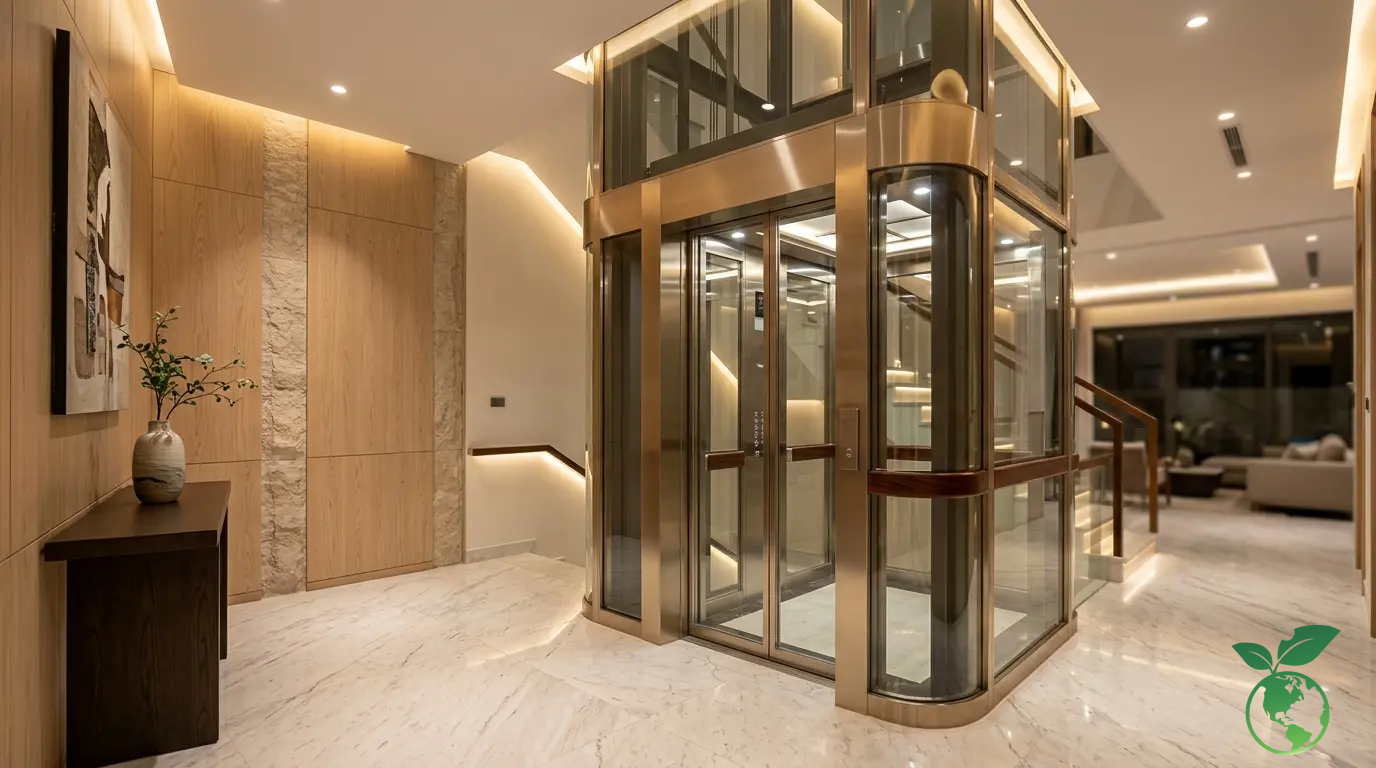
| Configuration | Suitable for | Equipment and installation budget range | Points to lock in |
|---|---|---|---|
| 300kg, 3 stops | Small house, 2–3 people | Approximately 420–650 million VND | Cabin and landing doors |
| 350kg, 4 stops | 3–5 story townhouses | Approximately 520–850 million VND | Pit, overhead (OH), materials |
| 450kg, 4 stops | Large families | Approximately 650–1,050 million VND | Wide cabin, design load |
| No pit, 3–4 stops | Renovation | Approximately 780–1,350 million VND | Structure and location |
- Request that the quote clearly states the number of stops and the actual travel height of the building.
- Compare internal cabin dimensions rather than just looking at the shaft's external dimensions.
- Check if the quote includes transportation, installation, load testing, and inspection.
- Clearly lock in the origin of each major component such as the traction machine, control cabinet, and landing doors.
- Do not compare two quotes with different technologies, materials, or construction conditions.
Price range for 350kg home elevators for 3 to 5 story townhouses
A 350kg home elevator typically carries about four to five people, suitable for townhouses with moderate floor space. With four stops, a machine-room-less traction system, and a standard stainless steel cabin, the all-inclusive budget usually falls within the 520–850 million VND range. Higher levels occur when choosing glass cabins, special automatic doors, or when the shaft is restricted.
For example, a townhouse in District 7, HCMC uses a 1,500 x 1,500mm shaft, four stops, and a 350kg cabin. The homeowner prefers landing doors that match the stone tone of the stairs. The total equipment and installation budget reached 690 million VND, excluding shaft construction. This configuration keeps the ground floor walkway wider than 900mm.
Price range for 450kg home elevators for large families or those needing a wide cabin
A 450kg home elevator is suitable when the house has elderly residents, needs a wheelchair, or if a wider cabin is desired. The price difference does not come solely from the load capacity. The shaft, landing doors, load-bearing frame, and foundation load also increase accordingly. With four stops, the budget is usually from 650 million to over one billion VND depending on the level of finishing.
For example, a villa in Thao Dien chooses a 450kg load so that two adults and a wheelchair can move comfortably. The 1,800 x 1,700mm shaft provides a cabin width of about 1,300 x 1,100mm. The investor chooses laminated safety glass and the control cabinet is placed inside a technical closet. Costs increased by 18% compared to a basic stainless steel cabin configuration.
When is a 300kg home elevator enough and when should you not choose it
A 300kg home elevator is suitable for homes with small areas, low frequency of use, and a need to carry two to three people. However, this load is not suitable if the family expects to use a wheelchair, transport bulky items, or has many people using it at the same time. Choosing smaller than your needs will create huge upgrade costs later.
Items that should be in an all-inclusive quote to avoid extras after signing
Một báo giá thang máy gia đình đúng nghĩa trọn gói phải nêu rõ phạm vi. Cần tách thiết bị, vận chuyển, lắp đặt, hoàn thiện, điện nguồn, kiểm định và bảo hành. Thang Máy Việt Ý khuyến nghị yêu cầu phụ lục kỹ thuật kèm bản vẽ giếng thang trước khi chủ nhà khởi công, vì sai lệch vài centimet cũng có thể làm thay đổi cấu hình cửa hoặc cabin.
Practical takeaway: compare prices on the same specification sheet, do not compare using a single total number.
What actual costs are included in the installation of a home elevator
The installation cost of a home elevator includes equipment and project tasks. New builds are usually easier to control because the shaft is calculated right from the drawings. Renovations may require floor reinforcement, opening floor slots, moving electrical/water systems, or erecting an independent steel frame.
| Cost group | New construction | Renovation | Potential risks |
|---|---|---|---|
| Equipment | Stable by configuration | Stable by configuration | Late load changes |
| Shaft | Concurrent construction | Reinforcement or steel frame | Obstruction of old structure |
| Power supply | Pre-arranged | Might need to reroute lines | Insufficient power capacity |
| Finishing | Architect coordination | Difficult to sync materials | Stone cladding and landing doors |
- Equipment includes the traction machine, control cabinet, cabin, landing doors, guide rails, and rescue device.
- Construction part includes the pit, shaft, rail support beams, and door openings.
- Electrical part includes the separate power source, grounding, shaft lighting, and protective devices.
- Finishing part includes landing door cladding, painting the steel frame, and sealing gaps.
- Legal part includes the initial safety inspection before putting the elevator into use.
Elevator equipment costs by load, number of stops, and origin
Load and number of stops are the two variables that influence price most strongly. Each additional stop increases the landing doors, rails, cables, signal wires, and installation time. The origin of the equipment also affects costs. Joint-venture elevators are often more flexible with cabins, while fully imported elevators have more synchronized configurations but delivery times may be longer.
Cost of constructing the elevator shaft before installation in new builds
Nhà xây mới nên chốt bản vẽ giếng thang trước khi đổ sàn. Hố pít, chiều cao OH và dầm đỡ ray phải phù hợp mẫu thang đã chọn. Không nên xây giếng thang theo kích thước “ước lượng”. Dựa trên kinh nghiệm thi công của Thang Máy Việt Ý, việc khóa bản vẽ sớm thường giảm đáng kể chi phí đục sửa và chậm tiến độ hoàn thiện.
Cost of structural renovation before installation in existing homes
Renovations require a thorough survey of the foundation, floors, stair location, and material transport paths. Some projects must use a self-supporting steel frame to avoid transferring loads to the old structure. A townhouse in Hanoi used an outdoor steel frame for a 350kg elevator, reducing the intervention area into the existing stairs and limiting demolition time to 12 days.
Cost of finishing landing doors, stone cladding, power supply, and commissioning
Landing doors need to be synchronized with hallway materials, but must not affect technical gaps. The power supply needs a separate circuit, protective devices, and grounding. After installation, the elevator must be inspected before operation. QCVN 32:2018/BLDTBXH is the occupational safety regulation for home elevators and has been in effect since March 1, 2019.
Costs often overlooked when comparing home elevator quotes
Items often overlooked include plastering/finishing the shaft, outdoor landing door rain protection, transport into narrow alleys, building steel frames, beam reinforcement, providing three-phase power, and removing obstacles. Treat an abnormally low quote as a technical question, not a default offer.
Practical takeaway: separate “equipment”, “construction”, and “finishing” to know what is actually included.
Why prices vary greatly for 350kg or 450kg home elevators
Two elevators with the same load can differ by hundreds of millions of VND. The difference lies in the drive technology, component standards, shaft conditions, number of stops, and finishing levels. A low home elevator price does not reflect sufficient value if it lacks landing doors, inspection, an automatic rescue device, or mandatory installation components.
| Technology | Main advantages | Limits to consider | Cost impact |
|---|---|---|---|
| Traction cable | Popular, smooth operation | Needs appropriate technical space | Medium |
| Hydraulic | Flexible low height | Needs oil and heat calculation | Medium to high |
| Screw | Suitable for renovation | Speed is usually lower | High |
| No pit | Reduces deep excavation | Must handle entrance step | High |
- Check safety component standards, not just the visible materials in the cabin.
- Compare the number of stops, travel, speed, and power source before commenting on whether the price is high or low.
- Evaluate structural costs based on the pit, OH, and load transferred to the building.
- Request a clear description of the drive technology, rescue device, and component warranty period.
- Consider the availability of spare parts throughout the elevator's operational lifecycle.
Difference between joint-venture and fully imported elevators
Joint-venture elevators typically use imported main components and locally manufactured cabins. The advantage is flexibility in size and cost. Fully imported elevators are more synchronized in design and factory control. However, homeowners need to ask clearly about the scope of “fully imported”, the Certificate of Origin (CO), and the Quality Certificate (CQ).
Influence of cable traction, hydraulic, screw, and pitless technology on costs
Cable traction uses a traction machine and load cables, usually suitable for townhouses with standard shafts. Hydraulic can be useful for low travel. Screw and pitless elevators are often suitable for renovations but are more expensive due to specialized configurations. EN 81-20 sets safety requirements for construction and installation, while EN 81-50 specifies tests for certain elevator components.
Impact of shaft size, overhead height (OH), and pit depth on installation price
Hố pít quá nông hoặc OH quá thấp có thể buộc thay đổi công nghệ và tăng chi phí. Không nên tự giảm kích thước để tiết kiệm diện tích. Mỗi hãng có giới hạn riêng theo tải trọng, tốc độ và hệ cửa. Theo các chuyên gia tại Thang Máy Việt Ý, bản vẽ cần kiểm tra đồng thời kích thước giếng, dầm treo ray, không gian bảo trì và đường thoát hiểm kỹ thuật.
Additional costs when choosing glass cabins, premium materials, or additional safety options
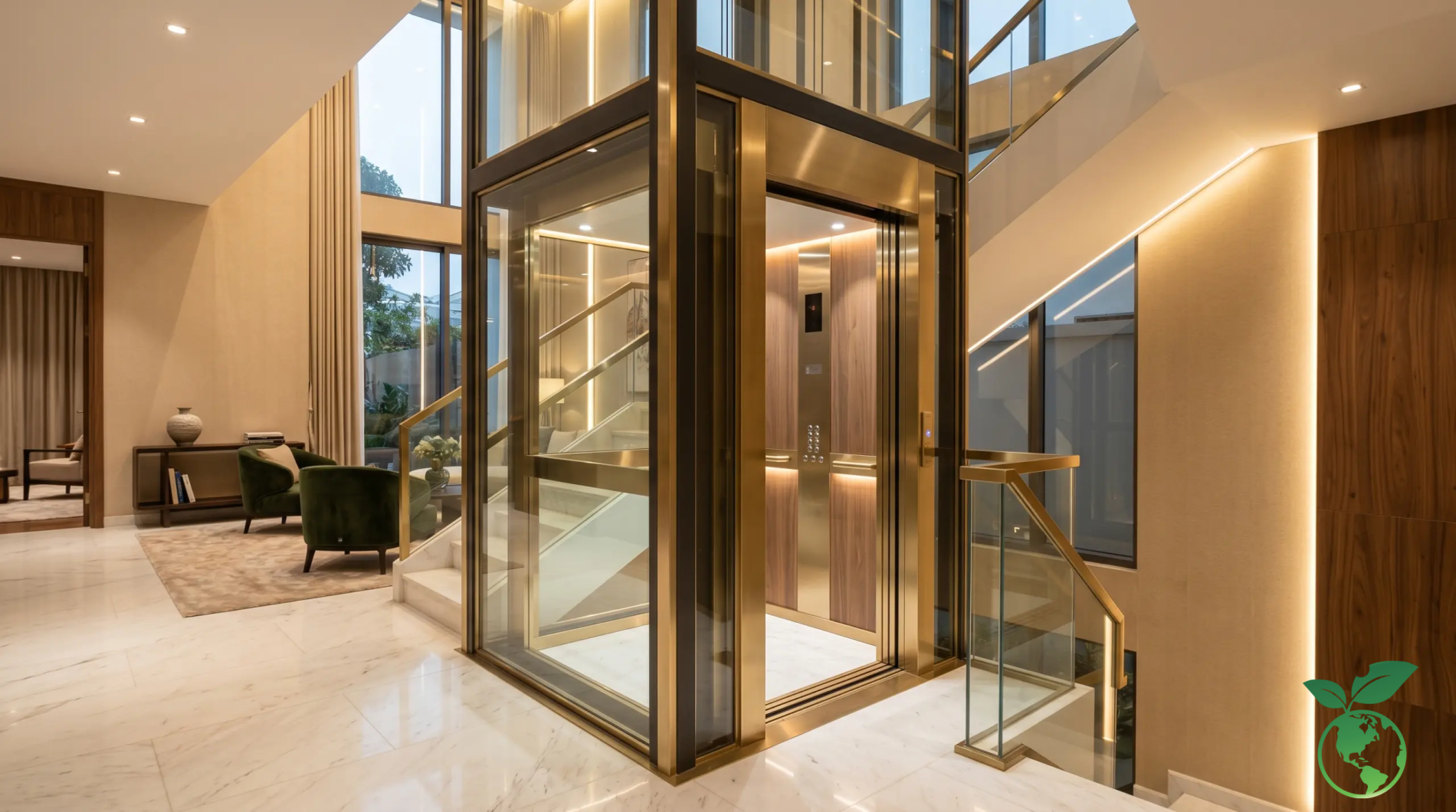
Glass cabins, natural stone, special handrails, display screens, and premium material-clad landing doors all increase costs. An automatic rescue device (ARD), door sensors, and emergency communication should not be viewed as decorative options. Prioritize safety first, aesthetics second.
Risks of choosing a low quote that lacks mandatory technical items
Quotes lacking rails, landing doors, grounding systems, load testing, or inspection will transfer risk to the homeowner in the final stage. This is when the project is finished and negotiation power is lowest. A low price without drawings and an equipment list is a sign to be cautious.
Practical takeaway: do not buy load capacity; buy a complete and suitable technical configuration for the project.
How to choose the right home elevator load so you don't over-buy or under-buy
Choosing the load must be based on the number of simultaneous users, the elderly, wheelchairs, furniture needing transport, and shaft area. A home elevator's price is only optimal when the load meets needs for at least the next ten years. Choosing too small is inconvenient; choosing too large increases the pit and structural costs.
| Load capacity | Suitable demand | Suggested cabin | Do not choose when |
|---|---|---|---|
| 300kg | 2–3 people | Approximately 900 x 800mm | Has wheelchair |
| 350kg | 4–5 people | Approximately 1,000 x 900mm | Often carries large items |
| 450kg | Wheelchair, large family | Approximately 1,300 x 1,100mm | Shaft is too narrow |
| Over 450kg | Large villa, lodging | According to design | Low usage demand |
- List the number of people who can use the elevator at the same time during peak hours each day.
- Check if wheelchairs, baby strollers, or furniture need to enter the cabin.
- Measure the available shaft area before deciding on the load and door type.
- Plan for the living needs of elderly parents for the next ten years.
- Do not use the “theoretical” number of people to replace actual cabin dimensions.
When to choose a 300kg home elevator for small area houses
A 300kg home elevator is suitable for houses with small floor plans, basic people-carrying needs, and little transport of goods. This configuration is suitable for three-story houses, families with few people, or homes where the stairs are still the main route of movement. Homeowners should try laying out the cabin on drawings before deciding.
When to choose a 350kg home elevator for daily travel needs
A 350kg home elevator is a good balance for modern townhouses. The cabin is enough for four adults in many situations. This is also a flexible load when the house has guests or needs to transport luggage. A home in Sala, HCMC chose 350kg, four stops, and saved about 1.8m² of shaft space compared to a 450kg configuration.
When to choose a 450kg home elevator for wheelchairs, the elderly, or wide cabins
A 450kg home elevator should be prioritized when there are wheelchair users, multi-generational families, or the homeowner wants a wide cabin. Door dimensions and wheelchair turning space need to be checked at the same time. Do not just increase the load while keeping the landing door narrow, as the accessibility function will not be solved.
Mistakes before locking the load that cause construction and operating costs to rise
A common mistake is choosing a load based on advertising rather than traffic flow. The second mistake is increasing the load after the shaft has been built. The third mistake is forgetting the structural load. These changes can lead to foundation reinforcement, changing landing doors, and delaying interior finishing.
Practical takeaway: simulate real usage situations before locking in the load.
Process for controlling costs before signing a home elevator installation contract
Cost control starts from the survey, not from price negotiation. Homeowners need to provide drawings, existing state photos, shaft dimensions, and usage needs. When input data is vague, quotes are usually just estimates. When data is sufficient, the home elevator price has a basis to be locked in.
| Stage | Documents needed | Person responsible | Results to receive |
|---|---|---|---|
| Survey | Drawings and existing state photos | Homeowner, engineer | Location plan |
| Design | Shaft dimensions | Architect | Technical drawings |
| Quote | Equipment list | Supplier | Full-package scope |
| Contract | Schedule and warranty | All parties | Clear terms |
- Send layout drawings, sections, and elevation of each floor to the survey unit.
- Confirm the shaft location before building walls, beams, or finishing stairs.
- Compare load, number of stops, speed, and cabin materials between quotes.
- Request an appendix specifying excluded items and conditions for extras.
- Lock in the schedule for production, delivery, installation, inspection, and handover for operation.
Checklist for site survey before receiving a home elevator quote
The survey needs to check the shaft dimensions, pit, OH, landing door location, beams, foundation, transport paths, and power source. With renovations, it is necessary to identify which floors can be cut/opened. The phrase suitable for further reference is shaft design consultation.
Checklist for checking technical drawings before building the pit or renovating the house
Drawings must show clear dimensions, landing doors, finished floor levels, and structural load. Do not just check the layout. Sections show the pit, OH, and whether beam locations conflict. A boutique hotel project in Da Lat avoided lowering the roof ceiling after discovering the OH was 180mm short.
Checklist for comparing quotes before signing an all-inclusive contract
Compare each line of equipment instead of comparing the total money. Need to check the traction machine, electrical cabinet, landing doors, cabin, ARD, warranty, inspection, and delivery time. The phrase Italy home elevators can be used to lead to the relevant product configuration page.
Warranty terms, maintenance, and delivery time need to be locked before ordering
The contract must clearly state the warranty period, number of maintenance visits, incident response time, component replacement scope, and inspection responsibility. Delivery time must be linked to the shaft handover milestone. Do not sign a contract based solely on verbal promises of progress.
Practical takeaway: a good contract is a contract that clarifies what is not included.
Cost of using a home elevator after installation and how to budget for the long term
The initial purchase price is only a part of the total cost of ownership. Operating costs include electricity, maintenance, inspection, and replacement parts. A variable frequency drive system (VVVF) helps control smoother operation, but the actual electricity consumption still depends on the number of trips, load, travel, and usage habits.
| Item | Frequency | How to budget | Point to monitor |
|---|---|---|---|
| Electricity | Monthly | By number of trips | Peak hours |
| Maintenance | Periodically | By contract | Maintenance log |
| Inspection | By legal cycle | Separate contingency | Expiration date |
| Components | By wear and tear | Long-term fund | Cables, doors, sensors |
- Record the number of trips operated each month instead of estimating electricity consumption by feeling.
- Keep a maintenance log to identify recurring landing door or sensor errors.
- Contingency budget for spare parts for the period after the warranty expires.
- Check for spare parts availability before choosing an uncommon configuration.
- Do not delay maintenance when there is noise, vibration, or abnormal door opening/closing.
Monthly electricity costs based on the family's actual usage frequency
A 450kg elevator does not necessarily consume much more electricity than a 350kg model if they share the same technology and number of trips. Electricity consumption depends more clearly on travel and frequency. Families should measure the supply circuit separately during the first three months to create a realistic budget estimate.
Periodic maintenance costs after the warranty expires
Maintenance helps detect wear at the landing doors, load cables, guide rails, and sensors. The appropriate frequency should follow manufacturer guidelines, usage levels, and inspection unit requirements. The phrase elevator maintenance service is suitable for linking to the in-depth service page.
Cost of replacing parts after many years of operation
Components do not fail at the same time. Landing doors, sensors, ARD batteries, and mechanical details often wear out according to the number of operational cycles. Homeowners should request a reference parts quote when signing the contract. This helps evaluate the ability to supply spare parts in the long term.
How to evaluate total cost of ownership instead of just looking at the purchase price
Tổng chi phí sở hữu nên gồm giá mua, xây dựng, điện, bảo trì, kiểm định, linh kiện và rủi ro dừng thang. Một cấu hình đắt hơn ban đầu có thể hợp lý nếu giảm sửa chữa, tăng độ đồng bộ và dễ bảo trì. Thang Máy Việt Ý khuyến nghị đánh giá vòng đời ít nhất mười năm trước khi quyết định.
Practical takeaway: buying an elevator is a lifecycle cost decision, not just the contract price.
Frequently asked questions about home elevator pricing and installation costs
The questions below help homeowners check the quote scope before making a decision. Answers still need to be adjusted based on the actual survey, because every shaft, structure, and finishing level is different.
| Question | Short answer | Information to verify |
|---|---|---|
| How much for 350kg? | Approximately 520–850 million VND | Stops and finishing |
| Does 450kg use more electricity? | Not necessarily much different | Number of trips and travel |
| Can it be installed in a renovation? | Can be | Structure, pit, OH |
| How long for maintenance? | By contract and usage | Operation log |
- Do not lock the price without knowing the exact number of stops and travel height.
- Do not choose 450kg just because you want a wide cabin if the shaft does not support it.
- Do not skip the structural survey when renovating a house already in use.
- Do not operate the elevator before completing the safety inspection according to regulations.
- Do not consider maintenance a cost that can be cut throughout the elevator's life.
How much does a full-package 350kg home elevator installation cost?
For three to five-story townhouses, a 350kg home elevator usually has a budget from 520–850 million VND for equipment and installation. The final price depends on technology, number of stops, cabin, landing doors, and shaft conditions. Construction work may be calculated separately.
Does a 450kg home elevator consume much more electricity than a 350kg model?
It cannot be concluded based solely on load capacity. With the same technology, number of trips, and travel, the difference may not be significant. Families should care more about the frequency drive, load balancing, standby mode, and usage habits than just looking at the nominal load.
Can a renovation house install a pitless elevator?
Yes, if the survey confirms the solution is suitable for the structure and floor height. Pitless elevators reduce the need for deep excavation but still require handling the entrance height, waterproofing, and maintenance space. The phrase pitless elevator is suitable for leading to the renovation solutions page.
How often should a home elevator be maintained?
Maintenance frequency should follow manufacturer recommendations, operating conditions, and service contracts. Houses used daily need a more regular inspection schedule than vacation homes. The most important thing is recording error history and immediately addressing signs of abnormalities in landing doors, noise, or vibration.
What information needs to be prepared to receive an accurate quote for my house?
Prepare layout drawings, sections, number of floors, floor height, shaft dimensions, existing state photos, wheelchair needs, finishing levels, and installation timeframe. This is data that helps the provider offer a realistic home elevator price, instead of an advertised price.
Home elevator pricing should be decided by project data, not by emotion. Homeowners need to remember:
- Choose 350kg for daily needs, and 450kg when you need a wide cabin or wheelchair access.
- Lock in shaft dimensions, pit, and OH before pouring floors or finishing interiors.
- Compare quotes by technical list, installation scope, and clear conditions for extras.
- Prioritize inspection, rescue devices, and maintenance instead of cutting mandatory safety items.
- Calculate total cost of ownership for ten years, including electricity, maintenance, inspection, and parts.
- Require the provider to clarify the origin of components, warranty, and delivery schedule in writing.
Đối với biệt thự, nhà phố hoặc khách sạn tại Việt Nam, một phương án đúng phải dung hòa an toàn, diện tích và ngân sách. Thang Máy Việt Ý là đối tác cung cấp, lắp đặt và bảo trì thang máy cao cấp có thể hỗ trợ khảo sát, kiểm tra bản vẽ và xây dựng cấu hình phù hợp trước khi công trình bước vào giai đoạn không thể sửa đổi với chi phí thấp.