When learning about elevator inverters, when an elevator suddenly stops, does not receive floor call commands, or the control display shows an E symbol, resetting is often the first reaction of the user. However, an error code does not always mean a fault that can be resolved by turning the power off and on again. For Homelift systems using Gearless motors and VVVF control, warnings may originate from the power supply, inverter, door safety chain, encoder, position sensors, rescue circuit, or mechanical protection devices.
For elevator inverter solutions, the key point is there is no universal E-code table for every elevator. E01, E02, or E05 on two controllers from different manufacturers may have completely different meanings. Therefore, the table below is organized by technical error groups so homeowners and architects can identify the appropriate direction for handling the issue; it does not replace the official error-code documentation of the inverter or controller manufacturer.
What Is an Elevator Inverter? The Role of the Control Cabinet in Operating European-Imported Homelifts
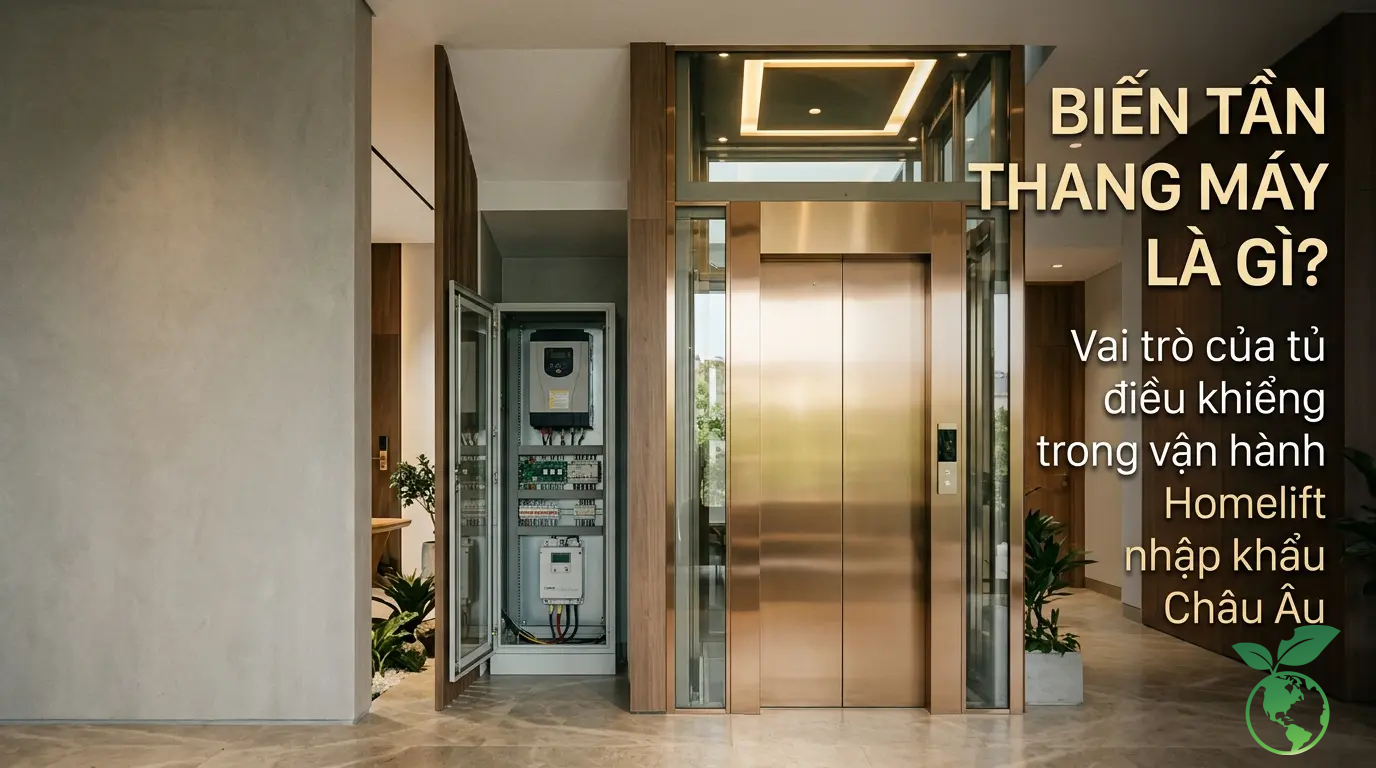
Elevator inverter functions: Controlling Gearless motor speed, optimizing smoothness and energy efficiency during operation
Elevator inverter is a power electronic device that controls the motor according to algorithms and configurations established for the system. In traction elevators using synchronous permanent-magnet gearless motors, the inverter works with feedback signals from the encoder to control acceleration, stable running, deceleration, and floor stopping.
During elevator inverter construction and installation, operating quality therefore does not depend solely on motor power. Smooth starting, accurate floor stopping, and system response to load changes are also related to inverter parameters, encoder data, control algorithms, power supply quality, cabin–counterweight balance, and the mechanical condition of the drive system. This is also why technicians should not change VVVF parameters merely to clear a warning that has appeared.
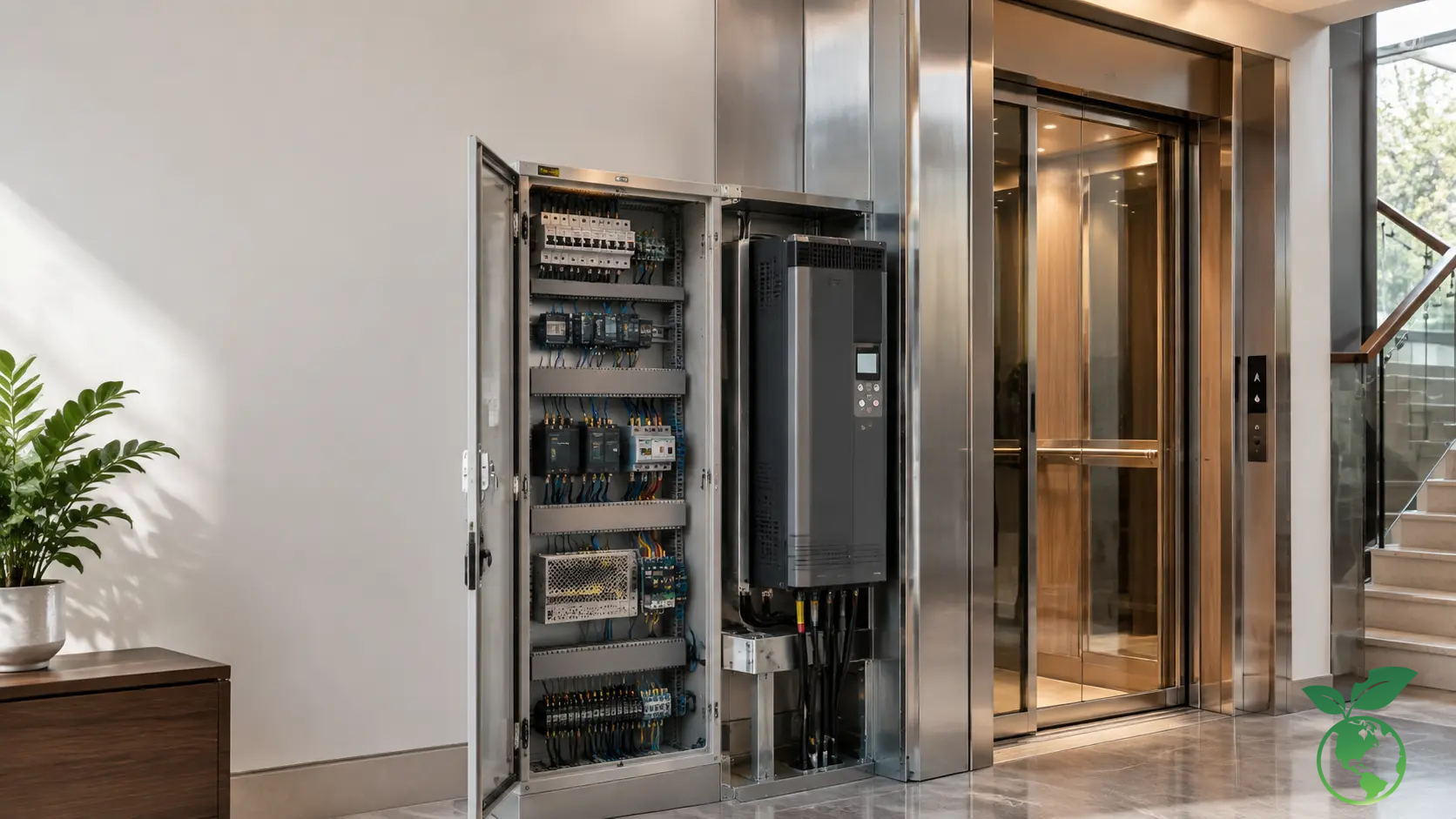
Structure of a home elevator electrical cabinet: Central controller, VVVF inverter, circuit boards, relays, and safety signal processing system
To optimize the efficiency and safety of the elevator inverter, a Conclusion does not contain only the inverter. Depending on the configuration, the system includes a central controller, switching and protection devices, VVVF inverter, control power supply, relays or communication modules, door signal circuits, position signals, safety chain, and communication with the automatic rescue device ARD. When a safety condition has not been confirmed, the controller may actively block the run command even though the motor and inverter are operating normally.
According to Thang Máy Italy technical experts on elevator inverters, this design helps provide a relative separation between motion control and safety monitoring. Therefore, a cabin that does not move is not sufficient to conclude that the inverter is faulty. Technicians need to read the fault history, I/O status, and safety chain before deciding to intervene with the power equipment.
Relationship between the inverter, Sicor Montanari – Italy gearless motor, and EN 81 operating standards for 200kg–630kg elevators
When learning about elevator inverters, with configurations using Sicor or Montanari – Italy Gearless motors, the inverter must be configured to match the characteristics of the motor, encoder, rated load, speed, and actual drive arrangement. Pairing equipment based on brand names without synchronizing parameters can lead to vibration during startup, unstable floor stopping, or overcurrent and speed-feedback warnings.
For elevator inverter solutions, from a safety perspective, EN 81 safety standards must be correctly understood according to the scope of each standard and equipment type. For passenger elevators and passenger-and-goods elevators within the relevant scope, EN 81-20 specifies safety requirements for construction and installation. In Vietnam, TCVN 6396-20:2017 is equivalent to EN 81-20:2014 and has replaced TCVN 6395:2008. Therefore, TCVN 6395 has historical reference value but should not be presented as the sole current standard for new designs.
Common elevator error code table: How to identify inverter, electrical cabinet, and Homelift control system faults
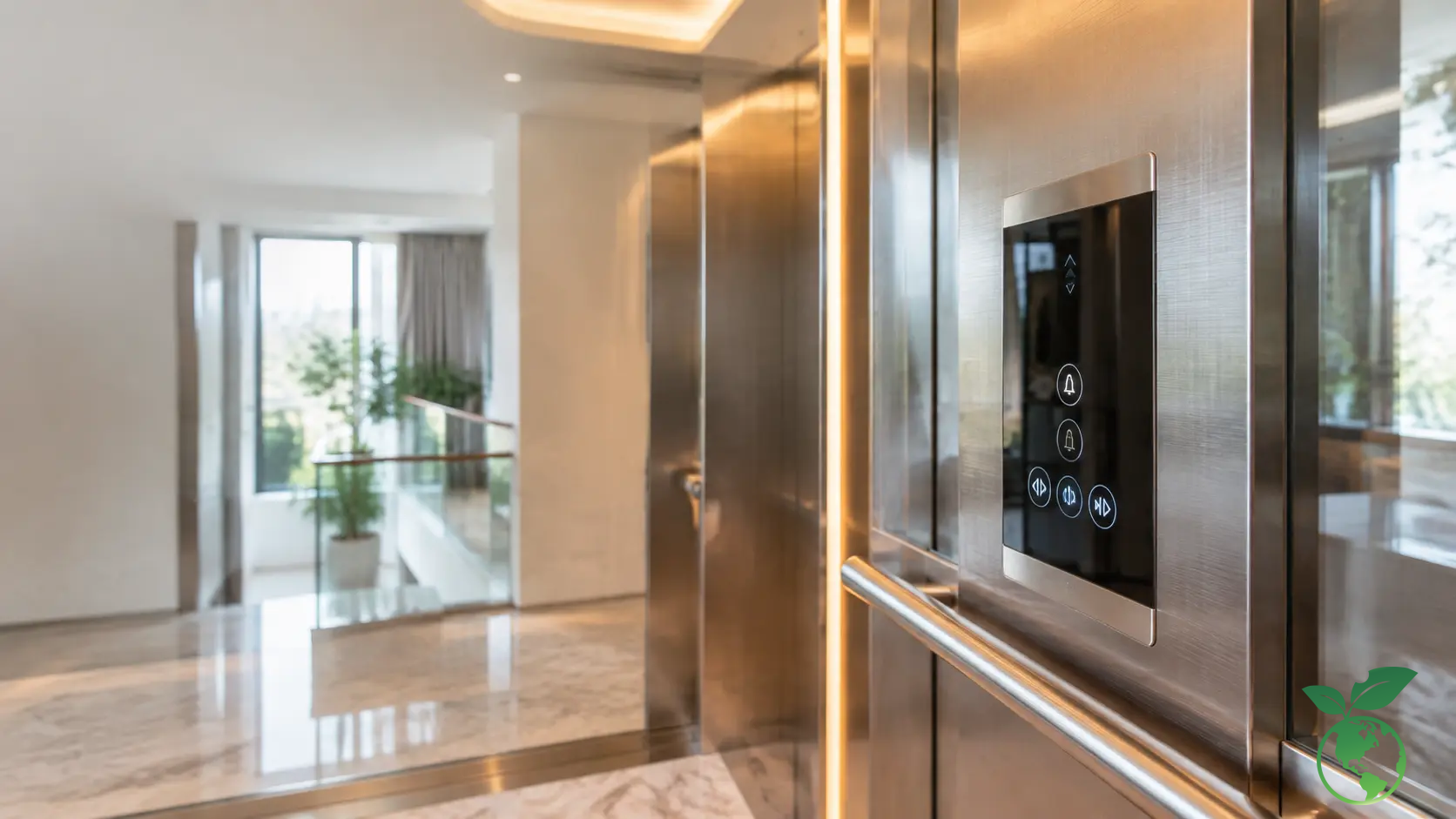
Common elevator inverter error groups: Overcurrent, overvoltage, phase loss, overheating, and causes affecting operation
During elevator inverter construction and installation, common inverter warnings can be classified by their electrical and control nature. Overcurrent is often related to load, acceleration/deceleration, braking, motor, power cables, or control parameters. DC bus overvoltage may occur during deceleration or when the supply voltage is abnormal. Overheating requires checking ambient temperature, cooling fans, dust, ventilation, and load level. Supply phase or low-voltage warnings require checking the power supply system before suspecting the controller.
| Warning group | Common symptom | Causes to check | Recommended action |
|---|---|---|---|
| Overcurrent | Elevator stops during startup or acceleration | Load, brake, motor, power cables, VVVF parameters | Read the fault log and perform measurements before resetting |
| Overvoltage | Fault during deceleration or stopping | Power supply, braking process, braking circuit, and deceleration parameters | Check voltage and braking system |
| Low voltage/phase loss | Does not start or stops abnormally | Input power, CB, connections, power phases | Stabilize the power supply before restarting |
| Overheating | Runs for a while and then reports an error | Ventilation, fan, dust, temperature, and load | Resolve the thermal cause before resetting |
| Encoder/speed feedback | Vibration, incorrect operation, or failure to start | Encoder, signal cables, connections, motor configuration | Stop operation and perform a technical inspection |
| Safety chain/door | Cabin does not receive the run command | Door locks, contacts, photocell, safety circuit | Do not bypass safety devices |
Elevator error code E table: Analyzing warning signals from the inverter, control board, and safety sensors in the system
To optimize the efficiency and safety of the elevator inverter, the phrase elevator reports an E error often leads users to search for a conversion table for E01, E02, E03 by number. This lookup method is accurate only when the brand and model of the controller or inverter are known. The letter E is often simply a warning prefix or the manufacturer's way of identifying a fault; the number that follows must be checked against the correct manual and firmware version.
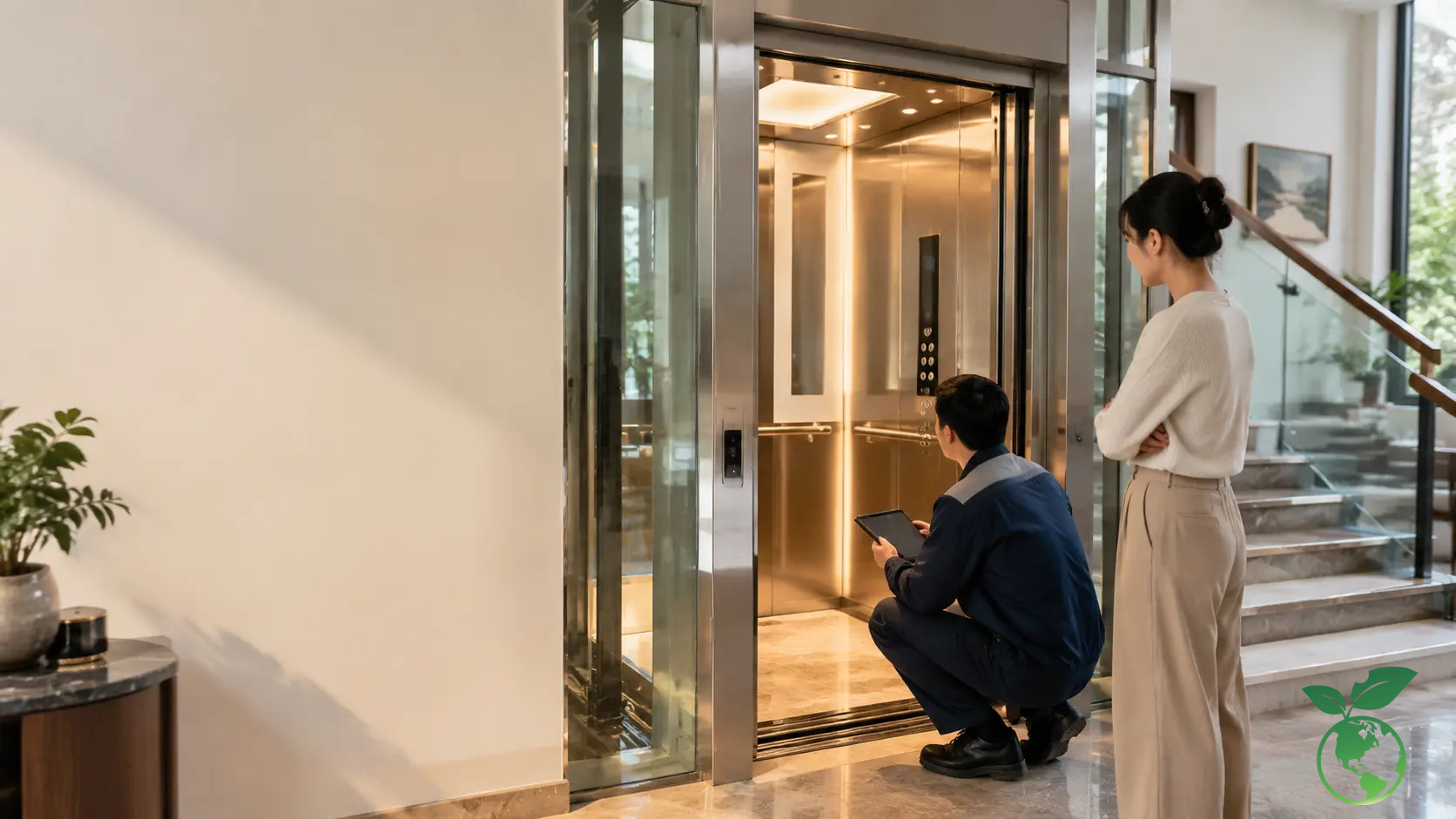
When receiving a fault report, Thang Máy Italy technicians prioritize accurately recording the displayed code, time of occurrence, current floor, door status, and circumstances before the error appeared. This data has greater diagnostic value than immediately resetting the system, because some controllers may change their status or displayed history after restarting.
Faults related to the cabin, landing doors, guide rails, and safety devices: When a technical inspection is needed instead of self-resetting the elevator
If the elevator makes unusual noises, the cabin vibrates strongly, shows signs of floor drift, the doors do not lock, the doors open or close abnormally, or the fault appears after every reset, use should be stopped and a technical inspection requested. Likewise, signs involving the governor, safety gear, traction machine brake, guide rails, or safety chain are not types of faults that users should handle themselves.
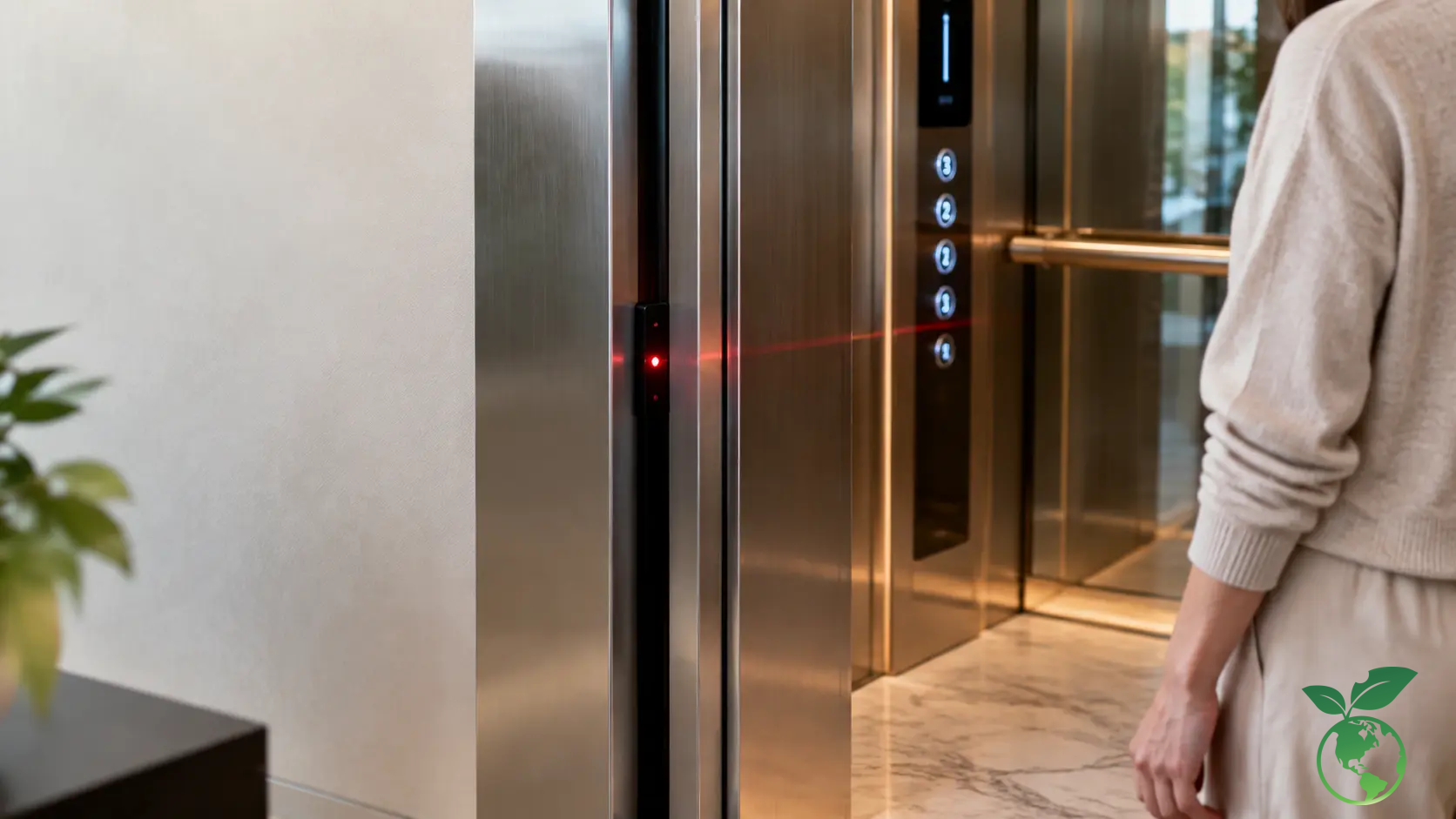
In particular, do not bypass door locks, photocells, or safety contacts to force the elevator to operate. These devices exist to prevent movement when safety conditions have not been established; disabling them can turn a stopped-elevator fault into a direct risk to users.
Proper elevator reset guide: Basic fault-handling procedure for the control cabinet and inverter
Checks before resetting the elevator electrical cabinet: Identify the fault cause, power status, and safe operating conditions
Before performing how to reset the elevator, confirm that no one is trapped in the cabin, the landing and cabin doors are in a safe state, the power supply shows no signs of instability, and there is no burning smell, impact noise, or abnormal mechanical sign. Users should photograph the error display before taking action so technicians have traceability data.
- Record the error code verbatim and the elevator status when the fault occurred.
- Check for abnormal signs that can be safely observed from outside; absolutely do not open the electrical cabinet without the necessary expertise.
- Only reset according to the operating instructions for the exact equipment model or the instructions of the maintenance provider.
- If the fault reappears, stop using the elevator and switch to technical inspection rather than continuing to reset it.
How to reset an elevator through the inverter and control cabinet: Restarting the system after checking fault signals
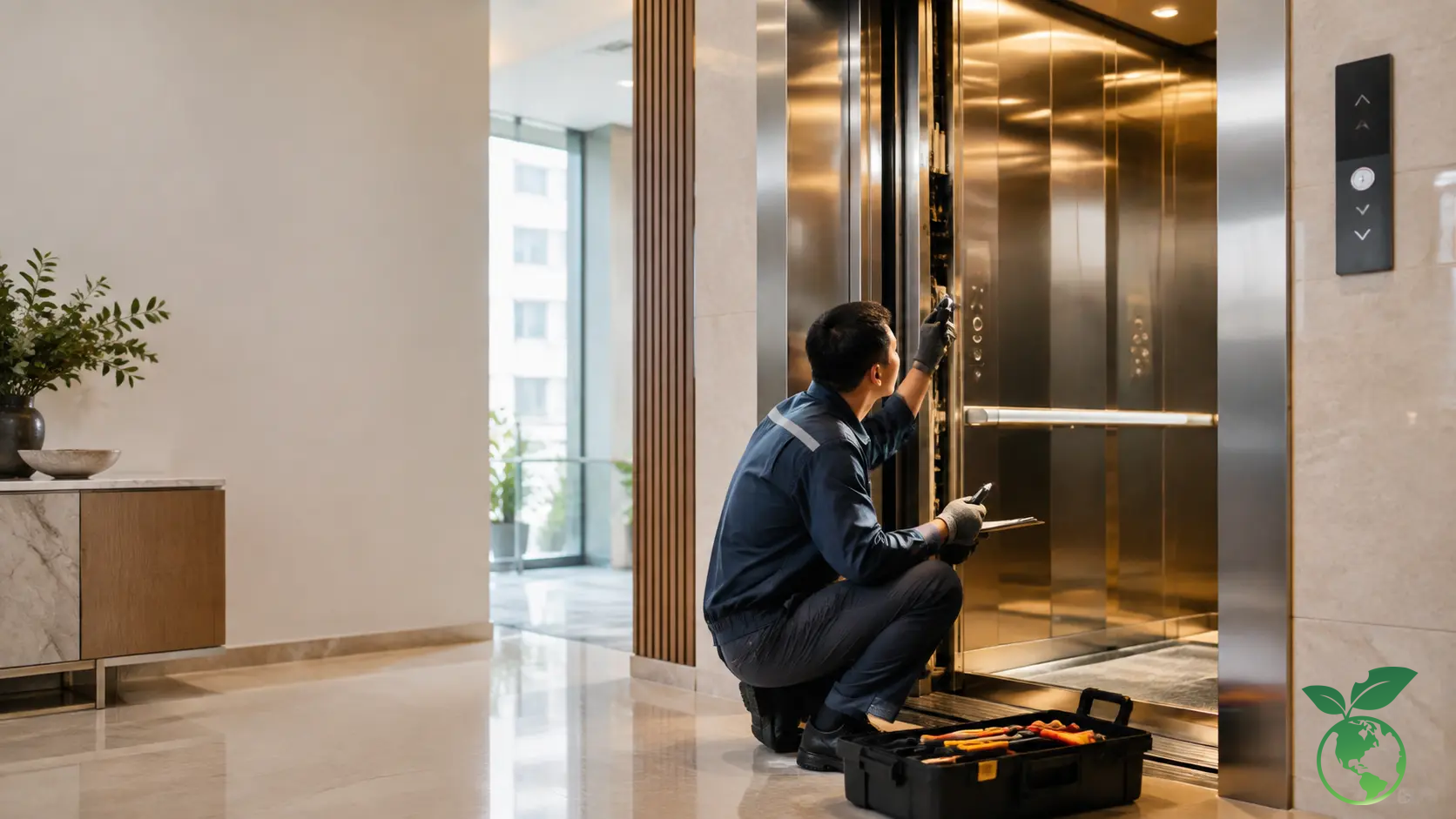
There is no universal reset key combination applicable to every inverter. For users, the appropriate approach is to restart the system according to the handover documentation for the specific system. Opening the control cabinet, operating the inverter keypad directly, clearing fault history, or changing parameters should be performed by qualified technicians.
After resetting, the technician needs to confirm that the system has returned to a ready state, the safety chain is closed under the correct conditions, and the door and position signals are valid before testing operation. The fact that the cabin runs again does not mean that the root cause has been fixed; the fault history and conditions under which it occurred still need to be assessed if the fault has previously recurred.
Cases where you should not reset the elevator yourself: Gearless motor faults, door systems, speed governors, and EN 81 protective devices
Warnings related to the encoder, traction machine brake, governor, safety gear, door locks, safety circuit, insulation faults, repeated overcurrent, or prolonged phase loss should be handled as technical faults. If the cabin is stuck between floors, users should also not open the landing doors themselves or attempt to move the cabin using electrical operations.
For passenger elevators within the applicable scope, national technical regulation QCVN sets safety requirements for equipment components and safety conditions. For residential elevators, the applicable regulatory scope must be correctly identified; QCVN 02:2019/BLĐTBXH explicitly states that residential elevators subject to QCVN 32:2018/BLĐTBXH are outside the scope of QCVN 02:2019/BLĐTBXH.
Technical factors affecting residential elevator error codes: From shaft construction to European-imported equipment configuration
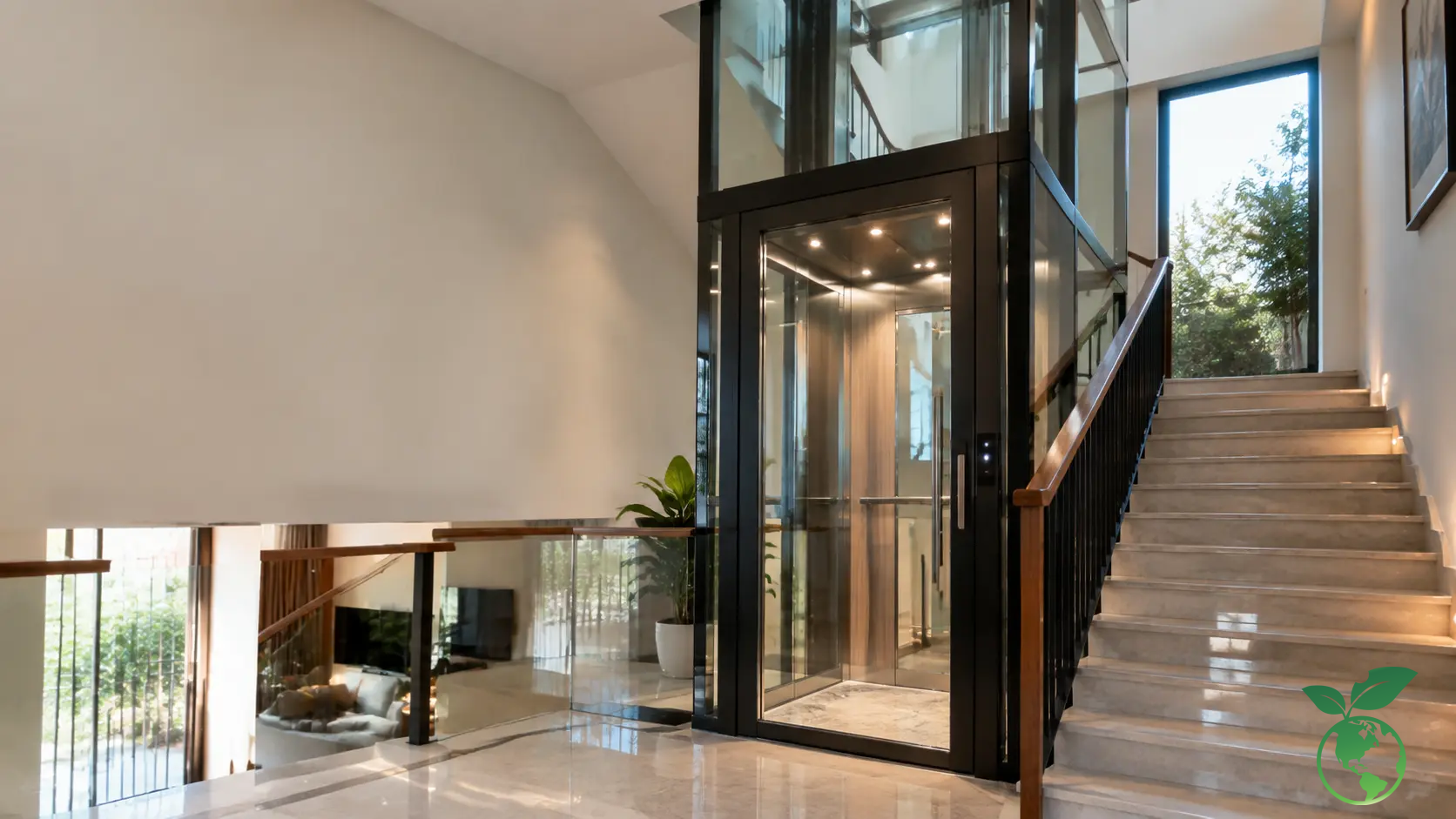
Impact of shaft dimensions, 200mm–300mm ultra-shallow pits, and OH height from 2,600mm on stable operation
The elevator shaft does not directly generate an inverter error code in the electronic sense, but construction deviations can create mechanical conditions that cause the protection system to intervene. Shaft verticality, rail position, cabin clearances, structural fixing points, and equipment installation space need to be coordinated from the drawing stage.
For solutions elevator control cabinet or an ultra-shallow pit of approximately 200–300 mm, the equipment configuration must be designed specifically for those conditions; pit specifications from one model should not be applied to another model. Similarly, an OH height of approximately 2,600 mm is feasible only with configurations designed and confirmed by the manufacturer accordingly. a pitless elevator is particularly suitable for renovation projects where foundation conditions are limited, but the final solution must be based on a site survey.
Checking the electrical system and motor for panoramic glass elevators and outdoor glass elevators with steel frames
Glass elevators and outdoor elevators have different environmental requirements from systems located entirely indoors. Solar radiation heat, rainwater, humidity, condensation, and cable routing can all affect the service life of electrical equipment if the design is unsuitable.
The load-bearing steel frame and approximately 10–12 mm tempered glass need to be calculated according to the building and specific elevator design, rather than treating glass thickness as the sole parameter determining safety. The locations of the control cabinet, sensors, junction boxes, and electrical equipment must have appropriate protection for the installation environment.
Cabin materials affect operation: Tempered glass, fine-brushed stainless steel, gold mirror, and requirements for protecting control equipment
Glass, fine-brushed stainless steel, or gold mirror stainless steel are primarily architectural and cabin-finishing choices, but changing materials can alter cabin weight. If the interior is renovated after the system has been configured, technicians need to check the impact on load, balance, and operating parameters rather than simply changing materials for aesthetic reasons.
For glass cabins, the arrangement of lighting, signal cables, and communication equipment needs to be addressed during the design stage to limit the need to add cables or intervene after completion. This is particularly important in villas and townhouses where the elevator is also an element of the interior design.
Elevator inverter fault-handling and electrical cabinet maintenance costs: Factors affecting the long-term operating budget
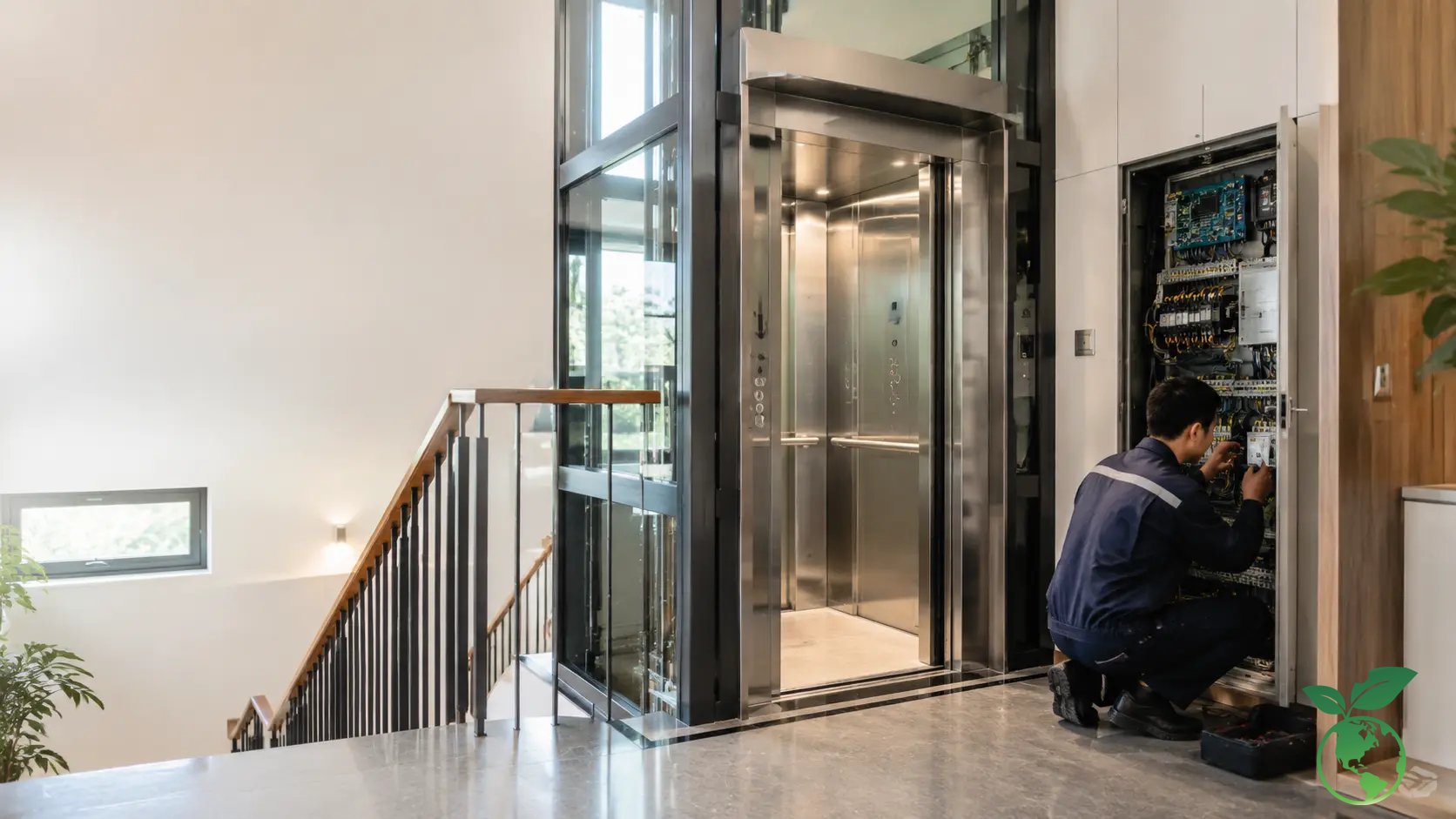
Elevator inspection and repair costs depend on inverter type, 200kg–630kg load capacity, number of floors, and actual equipment condition
A fixed price should not be quoted for every inverter fault before diagnosis. A warning may originate from a loose signal connector, but it may also involve the encoder, power board, control module, or motor. Actual costs depend on the equipment model, availability of replacement parts, load capacity from 200 kg to 630 kg, number of floors, and scope of work required.
For older systems, technicians must also assess compatibility if original components are discontinued. Replacing an inverter is not simply a matter of selecting equipment with the same power rating; the motor, encoder, voltage, control algorithm, controller communication, and ability to integrate with the safety chain must also be considered.
Budgeting periodic elevator electrical cabinet maintenance: Checking the inverter, Gearless motor, sensors, rescue system, and safety devices
Maintenance costs should be considered in terms of total cost of ownership rather than only the amount paid for each inspection. An elevator maintenance appropriate program needs to monitor the condition of the electrical cabinet, inverter, Gearless traction machine, brake, doors, sensors, ARD, backup power supply, and safety devices according to the actual configuration.
Fault-history data is an important technical asset. When the maintenance provider records fault frequency, occurrence conditions, and the parameters that have been adjusted, diagnosing recurring faults is often faster and better supported than replacing components based on guesswork. elevator maintenance therefore needs to include operational data management, not just cleaning and mechanical inspection.
Cost-optimized solutions for European-imported elevators: Coordinating shaft design, installation, inspection, and professional maintenance
Lifecycle costs are better controlled when the architecture, elevator shaft, power supply, and equipment configuration are coordinated before construction. Changing shaft dimensions or the location of the electrical cabinet at a late stage may require adjustments to the frame, rails, signal cables, and finishing plan.
For residential joint-venture elevators using Italian-imported motors and electrical cabinets, the reference investment range at Thang Máy Italy is approximately 280,000,000–450,000,000 VND depending on load capacity, number of floors, and configuration. Whole-unit European-imported elevators are referenced from 650,000,000–1,200,000,000 VND. Glass-enclosed or outdoor configurations may increase by approximately 15–25% due to the steel frame and four-sided glass; the final quotation should be based on the site survey and technical drawings.
Thang Máy Italy – Solutions for Error Code Handling, Inverter Optimization, and Safe, Sustainable Residential Elevator Operation
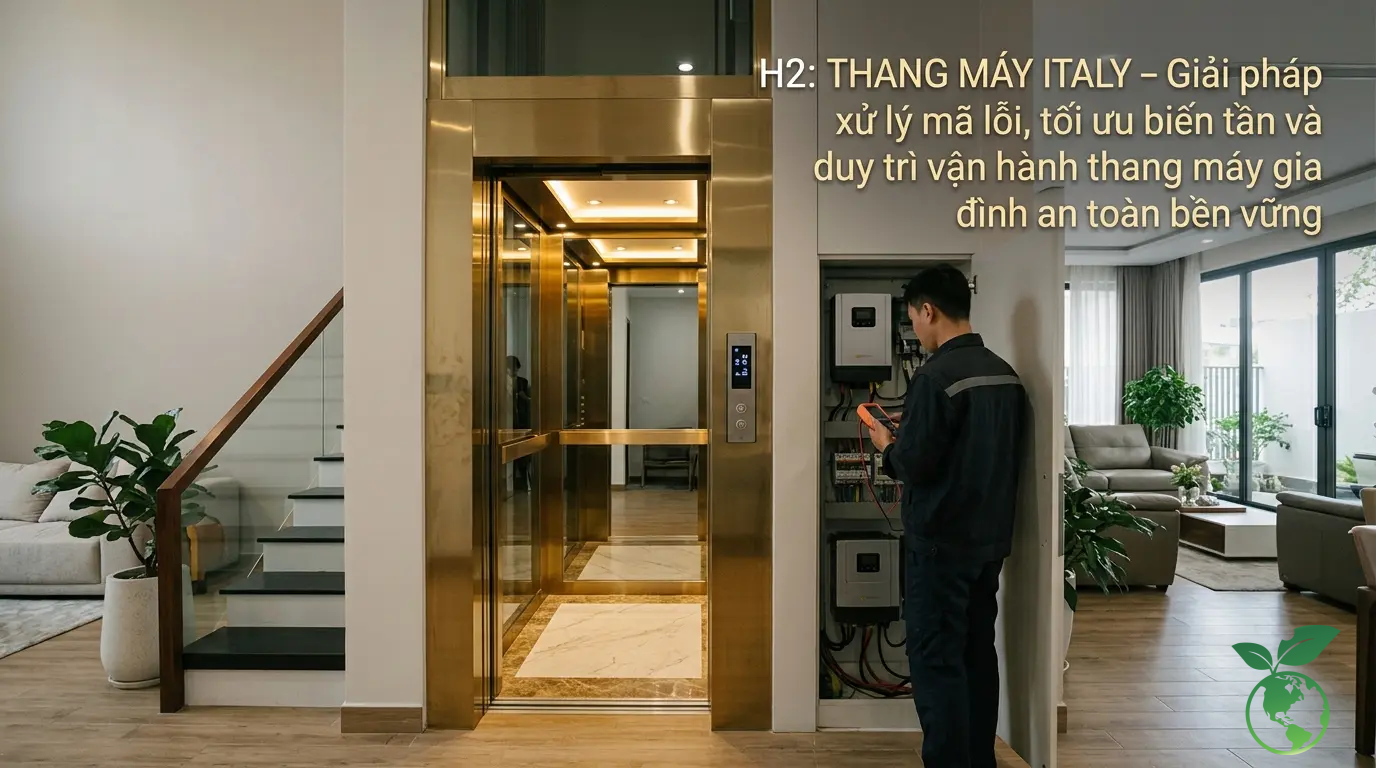
Technical consulting on elevator inverters, electrical cabinets, and suitable Homelift configurations for townhouses, villas, and renovation projects
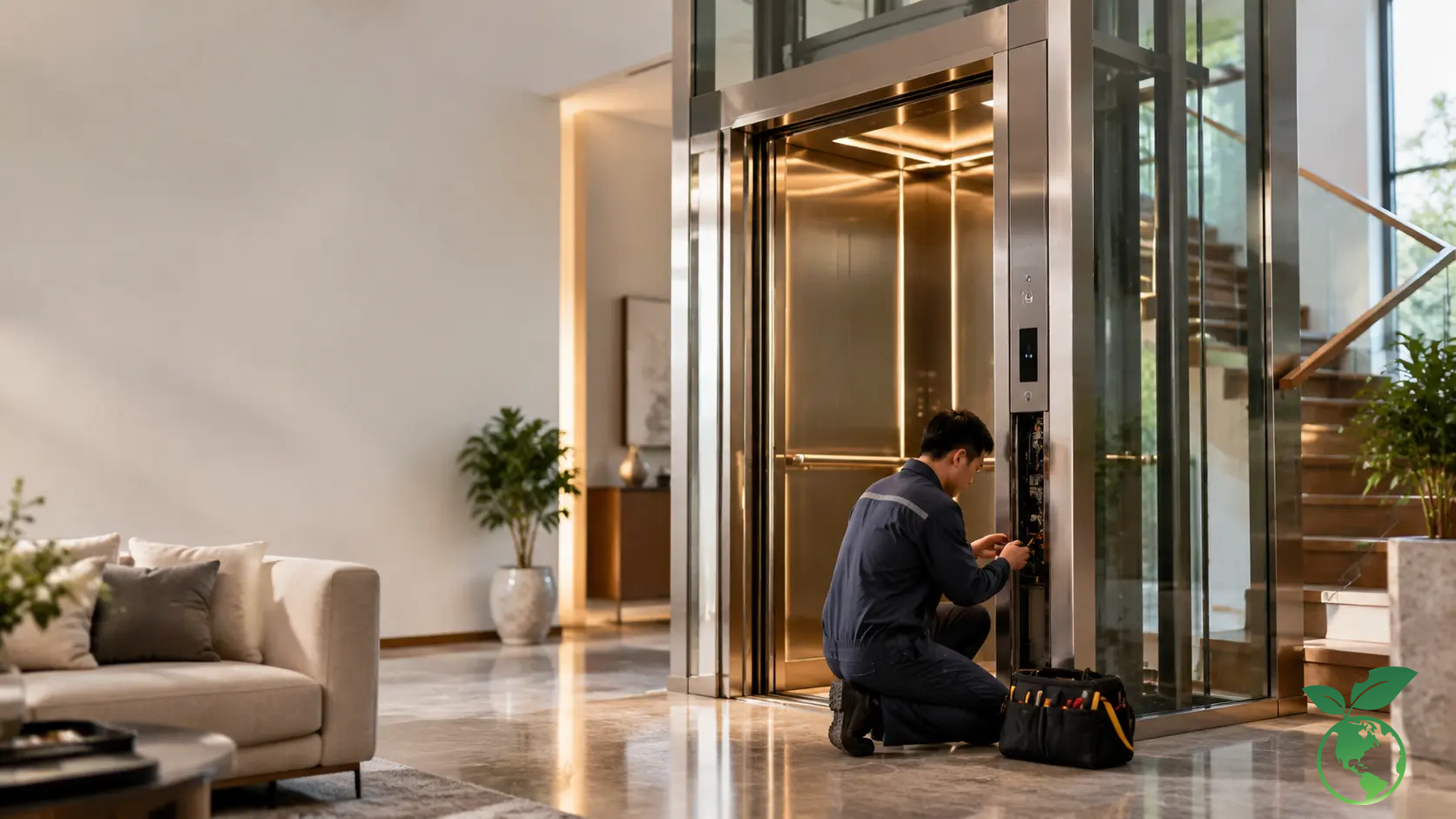
Thang Máy Italy approaches faults by tracing the chain of causes rather than simply clearing error codes. Technicians check fault data, power supply, controller, inverter, encoder signals, door chain, and related mechanical conditions before determining which equipment needs adjustment or replacement. For renovation projects, diagnosis also needs to be compared with the existing shaft conditions and architectural changes made after installation.
For new solutions, a load capacity of 200–250 kg can be considered for very limited spaces; the 350–450 kg group is often suitable for families with more occupants; a load capacity of 630 kg can be considered when the building requires combined passenger and goods carrying capacity. These figures are configuration guidelines, while cabin dimensions, shaft dimensions, and equipment power must be confirmed according to the specific model.
End-to-end services from site survey, elevator shaft design, installation, EN 81 inspection to periodic maintenance of European-imported equipment
The technical process needs to connect site surveying, elevator shaft drawings, equipment selection, installation, inspection, and maintenance. For equipment used in Vietnam, inspection documentation and procedures must comply with applicable laws, regulations, and standards; EN 81 is an important technical basis for systems within the scope of European standards but does not replace the obligation to comply with domestic regulations.
In particular, TCVN 6395:2008 has now been replaced by TCVN 6396-20:2017 and TCVN 6396-50:2017. Therefore, when preparing technical documentation for a new project, the applicable current standards and specific elevator type must be identified rather than copying requirements from old documentation.
Contact Thang Máy Italy Hotline 0902.98.99.58 for a free site survey and 3D drawings: Choosing a residential elevator solution that elevates the living space
When the elevator repeatedly reports errors, homeowners should provide a photo of the error code, inverter model, number of floors, load capacity, and description of when the error appears so technicians can narrow down the cause before the site survey. Thang Máy Italy provides consultation via Hotline 0902.98.99.58; address 104/17 Đường 10, P. Bình Tân, TP.HCM. Site surveys and configuration consulting are provided free of charge according to the company's current policy.
Frequently Asked Questions (FAQ)
Q: Can an elevator reporting an E error be reset at home?
A: It should only be reset when the operating documentation for the specific system permits it and there are no abnormal signs involving the doors, cabin, power supply, or mechanical system. If the error code reappears, stop using the elevator and investigate the cause. Do not repeatedly reset it to force the elevator to run.
Q: How much does it cost to replace an elevator inverter?
A: It cannot be determined accurately from the error code alone. The cost depends on the inverter brand and model, power rating, motor type, encoder, controller, and extent of damage. Thang Máy Italy recommends an on-site diagnosis before quoting repair or replacement costs.
Q: Can an elevator be installed in a renovation project where a pit cannot be excavated?
A: A pitless or ultra-shallow-pit system can be considered with a configuration specifically designed for those conditions. Some solutions have pits of approximately 200–300 mm or are installed directly on the floor, but applicability must be confirmed according to the model, existing structure, and project safety requirements.
Q: What elevator load capacity should be chosen for a small area?
A: For homes with very limited space, the 200–250 kg group can be surveyed; townhouses with a need for 4–6 people often consider the 350–450 kg group. Load capacity should not be selected based only on the number of people, because shaft dimensions, travel, doors, structure, and actual usage needs all affect the configuration.
Conclusion

An error code is diagnostic data, not the final cause of a fault. A system reporting overcurrent, a door fault, or loss of encoder signal needs to be inspected through the proper sequence of power supply – control – drive – mechanical – safety. Resetting is appropriate only after the condition causing the fault has been identified or ruled out; repeatedly clearing warnings can conceal signs of a developing failure.
For Homelifts, glass elevators, or outdoor elevators using European-imported equipment, coordinating everything from elevator shaft design to the inverter, Gearless motor, and maintenance helps reduce faults throughout the equipment lifecycle. When an error code needs to be checked or a new configuration surveyed, customers can contact Thang Máy Italy via Hotline 0902.98.99.58 for consultation based on the actual project conditions.