Many families, when installing elevators, only pay attention to the cabin or drive system, but overlook a component that directly affects safety and equipment lifespan: the elevator's electric doors. This is the most frequently operated component—opening and closing dozens of times a day, subjected to heavy mechanical loads, and must be guaranteed not to jam, get stuck, or open at the wrong time. Understanding electric doors correctly helps you choose the right type of elevator, maintain it properly, and avoid most operational problems.
What are Electric Elevator Doors?
Electric elevator doors are a system of doors that open and close automatically using an electric motor, controlled in coordination with the elevator's central control unit (PLC/inverter). Unlike semi-automatic doors that require manual force to pull, electric doors operate completely automatically according to commands from the system — the cabin stops at the correct floor, the safety contact closes, and only then is the door motor activated.
The system consists of two interlocking parts: the cabin door (which moves with the cabin) and the landing door (fixed at each landing). These two doors mechanically engage when the cabin stops in the correct position, opening and closing simultaneously. This is a crucial safety feature: if the interlocking mechanism malfunctions, the landing door will not be able to open from the outside—preventing falls into the elevator shaft.
Common Types of Electric Elevator Doors
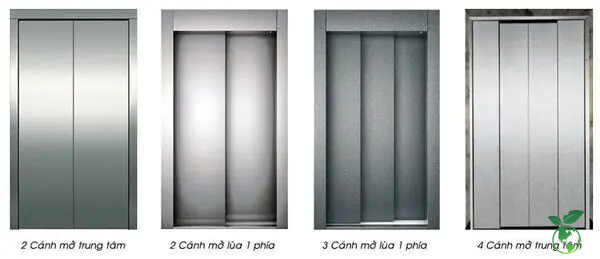
Side Opening
The entire door slides to one side. It has a simple design, low cost, and is suitable for small cabins. The access width is more limited compared to center opening, but the drive mechanism is less complex and easier to maintain.
Center Opening
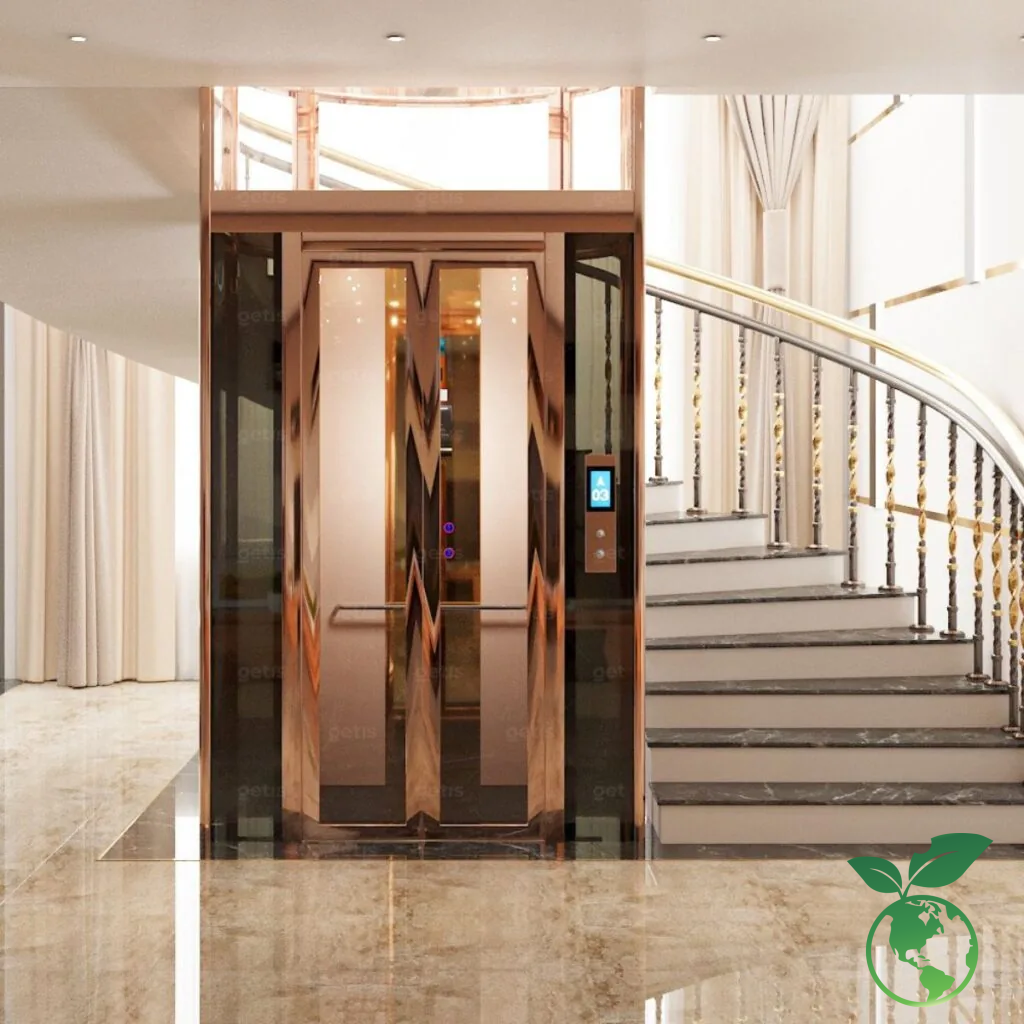
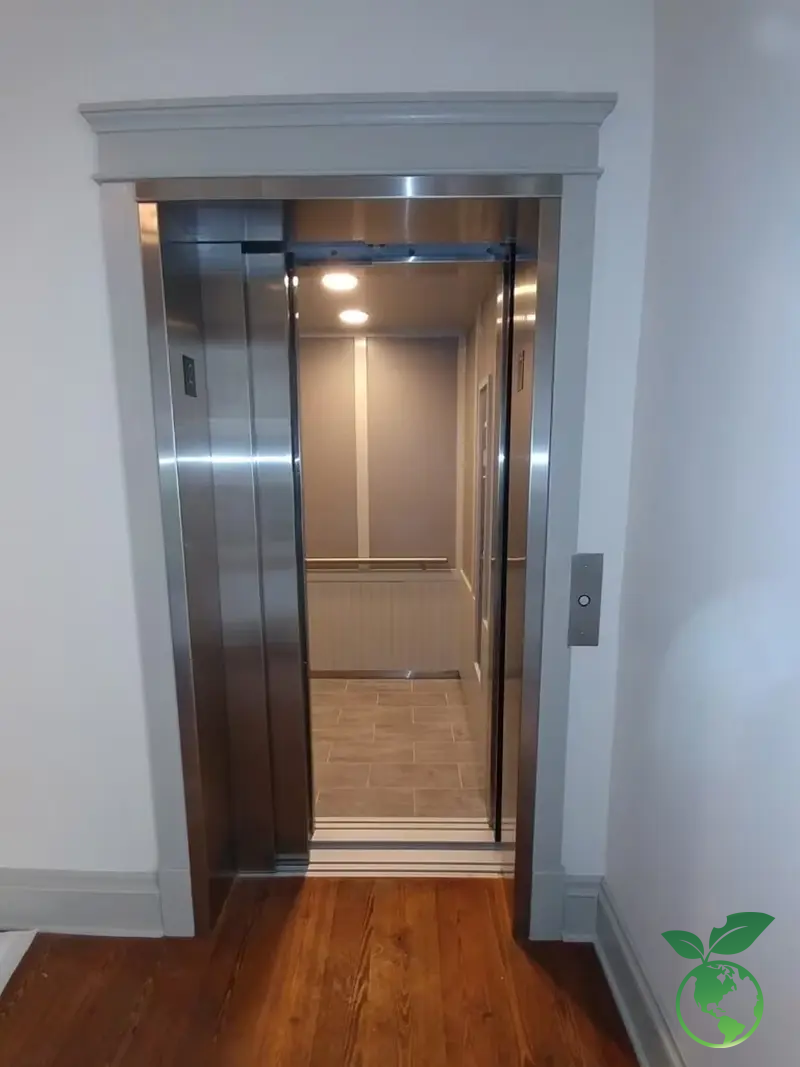
The two sliding doors extend symmetrically, providing a wider entrance and exit within the same cabin size. This is ideal for the elderly, wheelchair users, or spaces requiring convenient access. The mechanism is more complex but operates smoothly.

Key Technical Components of Electric Doors
Door Operator
As the heart of an electric door system, modern door motors are typically brushless DC or AC inverter motors, incorporating position feedback encoders to control opening and closing speeds along a trapezoidal curve (acceleration – stabilization – deceleration), preventing collisions at the travel ends. Important parameters include: power (W), torque (Nm), cycle life, and ambient temperature resistance.
Landing Door Interlock
The most important safety mechanism of the door system is the latch on the cabin door. When the cabin stops at the correct floor, the latch engages with the locking mechanism on the landing door, simultaneously opening the electrical contact and allowing the door to operate. If the cabin is not in the correct position, the landing door locks. EN 81-20/50 standard requires this mechanism to withstand a minimum pulling force of 300N without opening.
Safety Edge / Light Curtain
Safety edge is a rubber/plastic strip attached to the edge of the door, reversing the door immediately upon contact with an obstacle. Light curtain is an infrared emitter-receiver system that creates a "light curtain" along the entire height of the door—detecting thin objects like a child's hand before they reach the door. Elevators imported from Italy are often equipped with 3D light curtains that detect objects in depth as well.
Door Controller
The electronic module receives commands from the central PLC and coordinates the sequence: receives a stop signal at the correct floor → checks the safety contact → activates the motor to open the door → holds the door open for a set time → closes the door → confirms complete closure → sends a signal to allow the cabin to move. It supports auto-learning of the travel path after component replacement.
Door Sill
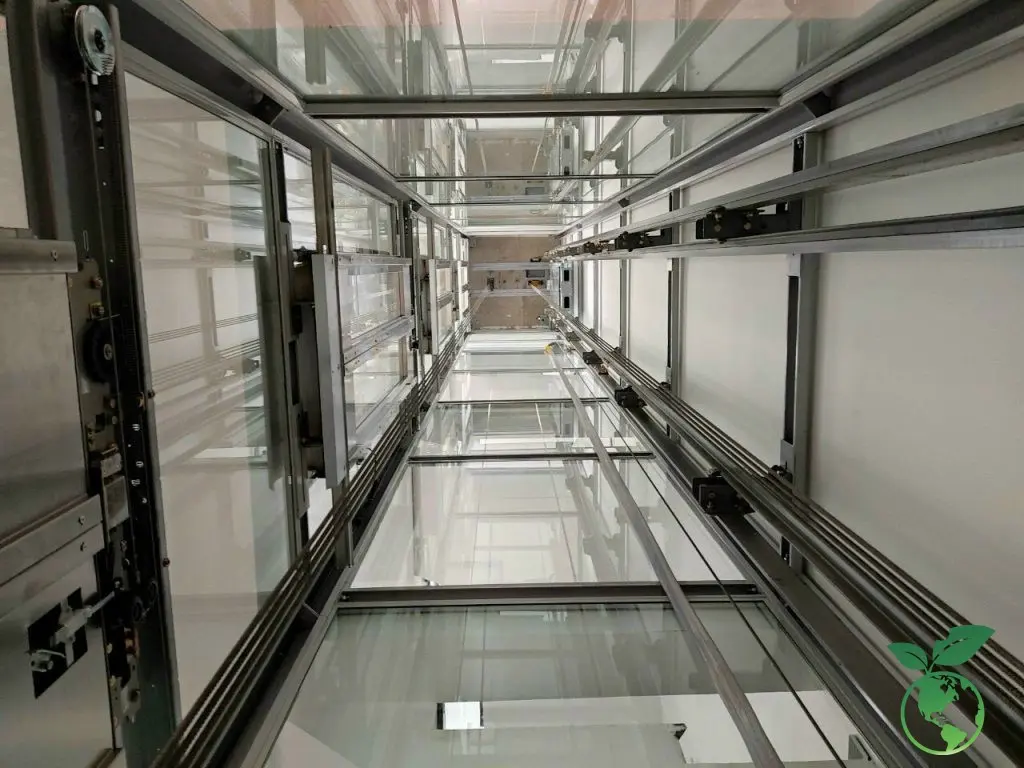
The top guide rail and bottom sill ensure the door slides straight and without wobbling. The sill is usually made of extruded aluminum or stainless steel, with guide grooves for the door wheels. This is the part that experiences the most mechanical wear and tear — it needs regular cleaning and lubrication to prevent the door from jerking or becoming heavy during operation.
Common Electric Door Problems and Their Causes
Most electric door malfunctions can be attributed to specific symptoms. The table below summarizes the most common cases encountered in maintenance practice:
- The door opens and closes jerkily, not smoothly — Dirty guide rails, worn wheels, incorrect speed profile.
- The door opens and then closes immediately — Light curtain is affected by external light interference or dust on the transmitter/receiver.
- Door won't open even though cabin is on the correct floor — Interlock contact fault, latch not engaging correctly.
- Cabin door opens but landing door doesn't — Cabin latch is worn or misaligned, needs adjustment.
- Elevator continuously reports door error — Motor encoder failure or controller loss of feedback signal
Why Choose Electric Door Elevators Imported from Italy?
Italian technology — European safety standard EN 81-20/50
Italian elevator technology is renowned for its high level of precision in door mechanisms — particularly in inverter door motors with integrated high-resolution encoders and multi-level 3D light curtain systems. Italian manufacturers adhere to EN 81-20/50 and CE certification, requirements far more stringent than typical market standards.
At Italy Elevator Import Company Limited, all electric door components—from the motor operator to the interlock mechanism—are genuine imported parts; no domestically sourced replacement parts are used. This ensures an operating cycle of over 500,000 open-close cycles without requiring a major overhaul of the door mechanism.
Maintenance Procedure for Electric Elevator Doors in Italy
1. Regular check-ups (every 3 months)
Clean the guide rails and door sills; check the tension of the drive belt/chain; test the reaction of the safety edge and light curtain using standard obstacles.
2. Lubricate the mechanism (every 6 months)
Apply specialized grease to the door wheels, top rails, and drive joints. Do not use regular oil as it easily attracts dust and causes uneven lubrication over time.
3. Electrical and control system inspection (every 6 months)
Measure the resistance of the interlock contacts; check the encoder signal; review the door controller error log if the system stores operating logs.
4. Adjust speed profile (once a year)
Restart the auto-learning process to allow the system to automatically update the door's travel path, ensuring smooth operation after natural wear and tear on components or after part replacement.
5. Hand over maintenance report
Italy provides inspection reports after each maintenance, documenting the condition of each part and recommending replacement if necessary — transparent and with a track record.
Frequently Asked Questions
1. Do electric doors in home elevators need maintenance if they are used infrequently?
Yes. Even with infrequent use, electrical contacts can oxidize, door wheels can become stiff due to lack of lubrication, and light curtain sensors can accumulate dust, reducing their sensitivity. Maintenance at least every six months is still recommended, even for elevators that are used infrequently.
2. Elevator doors often malfunction after a few years of use. What are the common causes?
This is mostly due to dirt buildup on the door sill and guide rails, or uneven wear on the door wheels causing misalignment of the travel — the controller receives an abnormal signal from the encoder and triggers a safety error. Cleaning and mechanical inspection usually resolve 70–80% of cases before electronic component replacement is needed.
3. What is the difference between a light curtain and a safety edge, and which one should I choose?
Safety edge sensors are mechanical contact sensors that only react when in direct contact with the door edge. Light curtain sensors are non-contact sensors that detect obstacles before they reach the door. Home elevators with young children or elderly people should prioritize light curtains, ideally 3D types.
Contact us for a free consultation.
If you are considering installing an elevator or experiencing problems with your current elevator's electric door system, the technical team at Italy Elevator Import Co., Ltd. is ready to provide free consultation — from choosing the right door type for your space to assessing the condition of your existing system. Contact Italy for direct expert support, no purchase commitment required.